Mohammed Ali’s first independent attempt at decorating a vehicle was rubbed off. He was paid nothing. Recalling the episode in a 2020 interview, the artist known as Moha placed it around 1999, after losing a job selling hardware. Another chance came when a garage’s usual designer was away. That bus took him a month of trial and error. Nairobi Wire1
It is an unglamorous beginning for someone whose work would help shape one of Nairobi’s most conspicuous arts. The city’s elaborate matatus carry portraits, lettering, and compositions drawn from music, football, film, religion, and public life. But the confidence of a finished design conceals the more uncertain act of learning how to put it there.
A passenger encounters the result for seconds before deciding whether to board. An artist can spend days resolving it. That imbalance runs through the trade: attention arrives quickly, while the skill needed to earn it accumulates slowly, through commissions that may go badly before they go well.
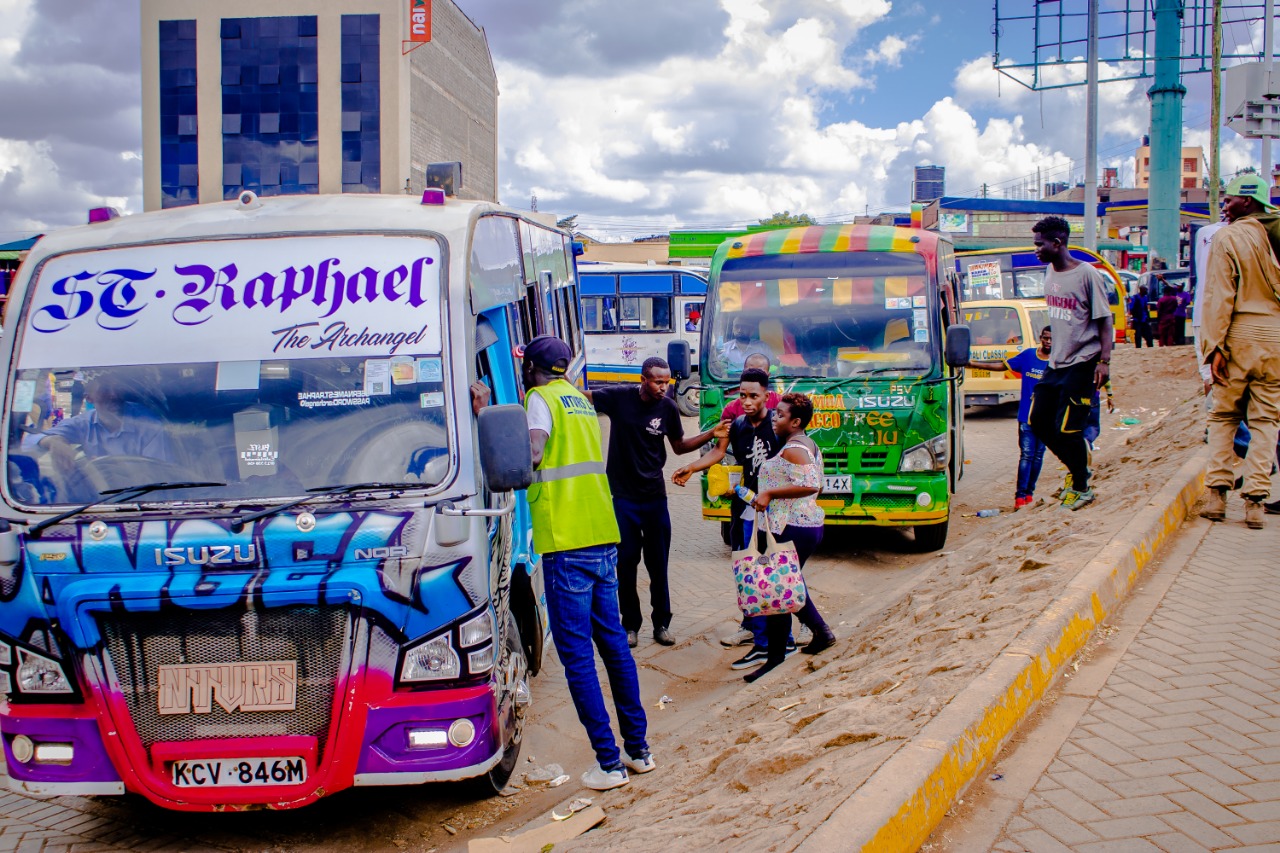
The broad term matatu includes privately operated public-service vehicles; nganya is used for the heavily customised vehicles that attract enthusiasts. Treating every matatu as a spectacular party bus would miss the variety of the transport system. The extravagant examples are one particularly visible expression of a much larger working world.
Their cultural importance begins with that work. These vehicles carry people who need to reach jobs, schools, homes, and appointments. Decoration does not float above that purpose. It is attached to a daily transaction involving money, time, and the expectation of arriving somewhere.
Historian Kenda Mutongi’s Matatu: A History of Popular Transportation in Nairobi follows the industry from the 1960s and places it within urban growth, enterprise, politics, and popular culture. Its scope is a reminder that the painted exterior belongs to a deeper history of how residents have made a city usable. University of Chicago Press2
The people making those journeys possible bring their own ambitions to the road. An owner wants a vehicle that fills. A driver needs to work through the day’s traffic. A painter wants a commission that will lead to the next one. The matatu gathers those interests into an object a passenger usually approaches with a much simpler question: will this get me where I need to go?
Mutongi’s earlier scholarship traces the growth of these services alongside post-independence migration to Nairobi and the demand for connections between expanding residential areas and employment. Whatever else a matatu offers, it occupies that practical relationship between where people can live and where they need to go. “Thugs or entrepreneurs?”3
Calling the system informal can obscure how much has to be coordinated. A seat, a speaker, a painted panel, and a door all make claims on the same limited space. Someone must fit them together so the vehicle can return to service. The artistic decisions take place inside a business that cannot earn fares while it remains in the workshop.
Recent reporting on the Rongai route describes an economy involving artists, fabricators, sound engineers, upholstery specialists, and lighting technicians. That list changes the picture. Behind a single vehicle stands a network of people whose skills are complementary and whose work must fit into the same physical space. TUKO, 20264
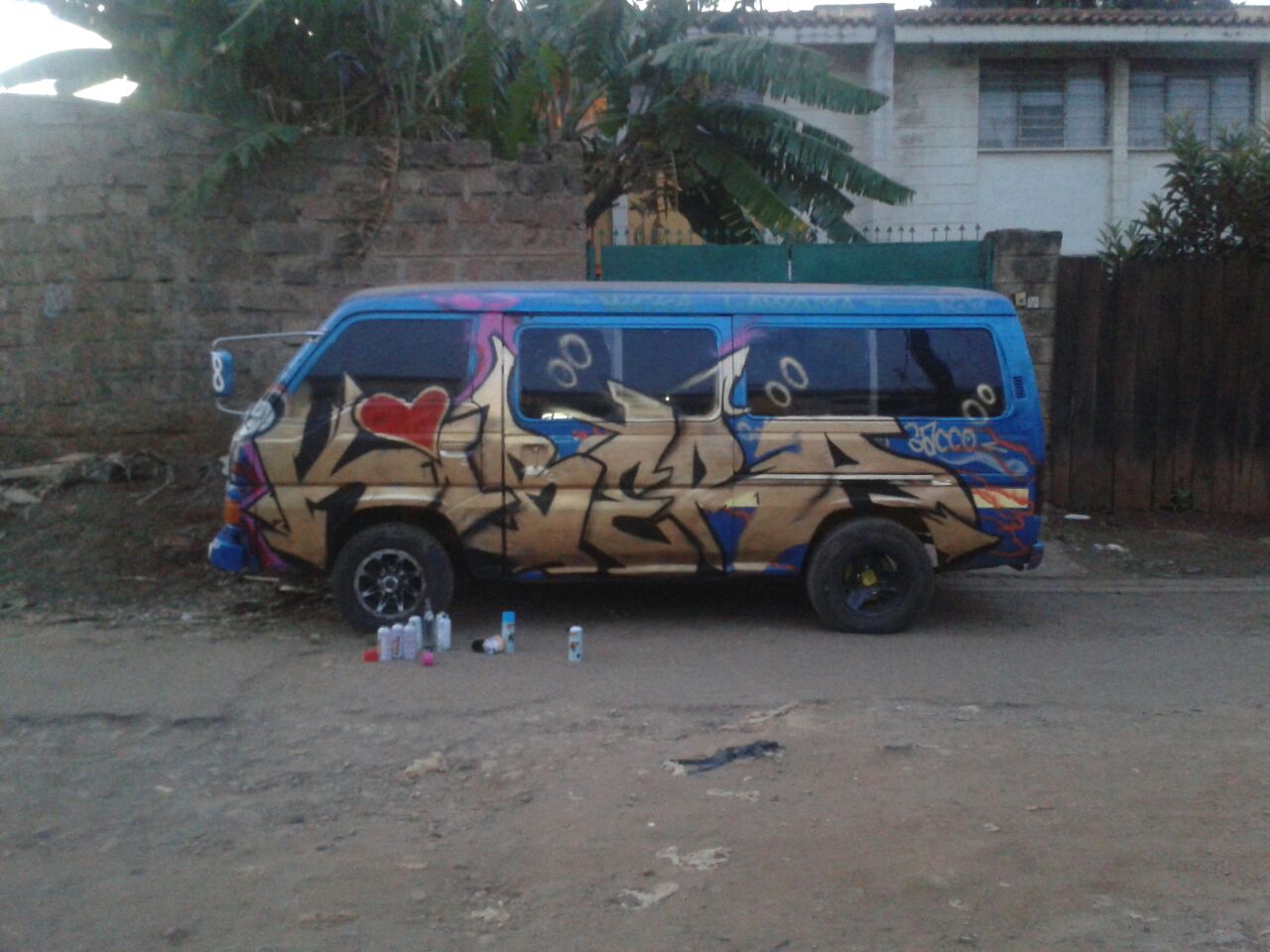
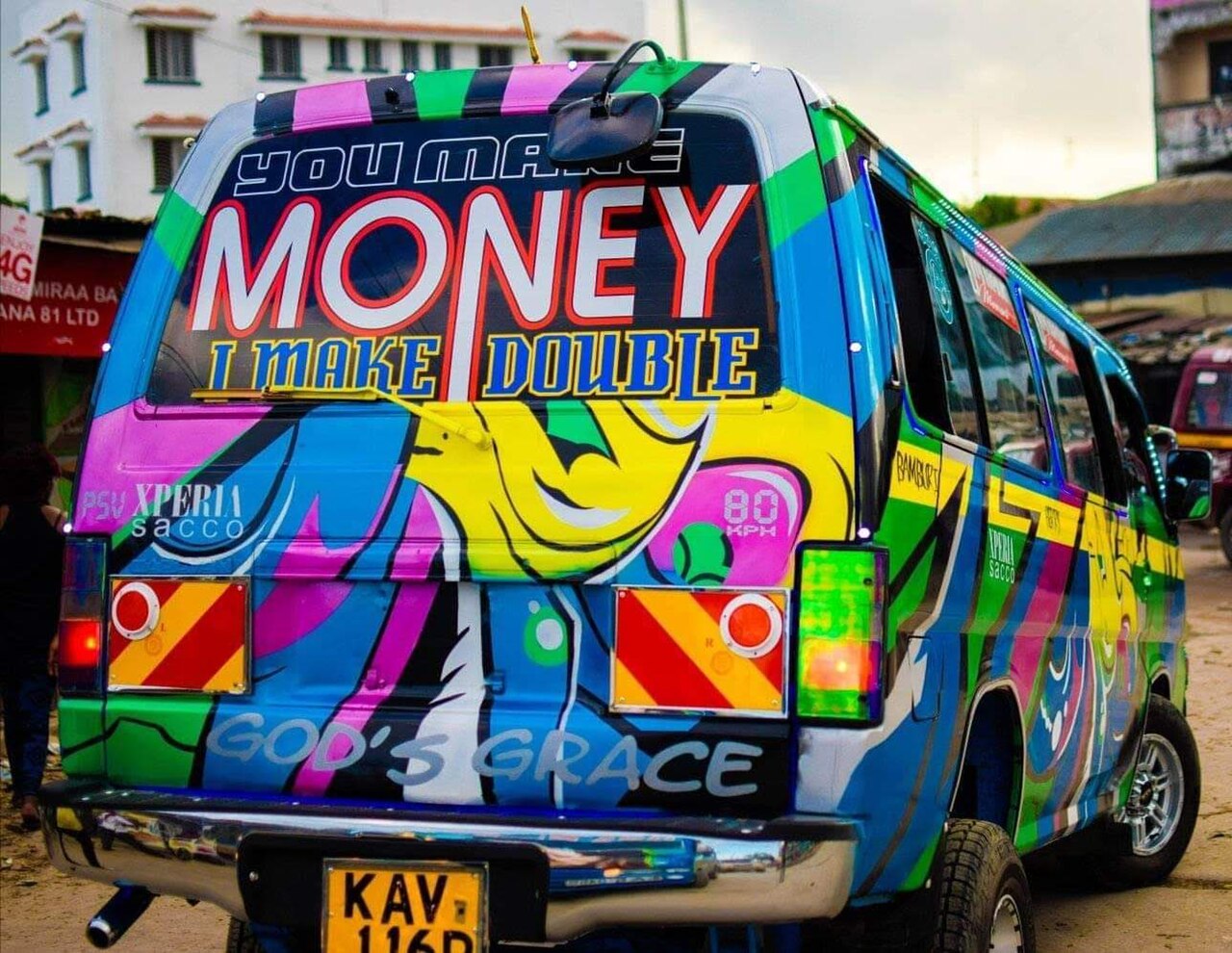
The bus becomes a collaborative design commission. A painter has to consider windows, panels, doors, and the angles from which the work will be seen. Lettering must survive interruption by the vehicle’s structure. A portrait has to remain legible when the bus passes a viewer who has only a moment to look.
This is a particular form of graphic intelligence. A composition that works on a flat poster may behave quite differently across a curved body. The moving surface gives the artist a set of constraints and an unusually large audience.
Moha’s interest had begun before the failed commission. In a 2016 Standard interview, he remembered sketching vehicles as a schoolboy. The profile described owners wanting identities passengers could recognise. A childhood habit of looking closely at buses had become a way of making them distinguishable in traffic. The Standard5
Recognition did not immediately mean a reliable living. Moha told Nairobi Wire that clients sometimes drove away promising payment and never returned, leaving the people who had worked on the vehicle unpaid. By 2020, he required a substantial deposit and full payment before release. A rule about money was also a rule about responsibility to the workshop.
That detail changes the view of the painted bus as soon as it leaves. Its departure can mean a completed job and wages earned. It can also mean that an artist has lost the only thing holding a customer to a promise. Learning to protect the work includes learning when to keep the keys.
Signature matters in that setting. A recognisable workshop style gives the maker a public identity alongside the vehicle’s own name. The bus advertises the transport service and demonstrates the ability of the people who transformed it.
A University of Nairobi study approached matatu decoration through its imagery and symbolism, interviewing designers, operators, owners, and passengers. Its range of participants reflects the different people who have a stake in a design. The person who pays, the person who paints, and the person who boards may value different parts of the same image. University of Nairobi research6
A face on a bus can signal admiration, aspiration, humour, or affiliation. Its meaning depends on what accompanies it and who encounters it. A famous performer may be internationally recognisable while the overall composition remains specific to a Nairobi route and audience.
This is how global culture becomes local material. Images do not arrive with a single fixed meaning that survives every reuse. Artists select them, position them beside other references, and make them answer to a new setting.
In reporting published by The Star in January 2026, enthusiast Praise Mwangi described recognising young Nairobians’ lives and efforts in the graffiti. He valued the company of other young passengers as well as the appearance of the vehicle. Commuter Dennis Machwani spoke of entertainment and a sense of Kenyan identity. A portrait of Rihanna or Bob Marley could belong to an experience that felt close to home. The Star7
Mwangi’s response gives the decoration a purpose that is difficult to put on an invoice. Being represented can be as simple as feeling that somebody designing a public place has imagined a person like you using it. A familiar reference says that your tastes have been allowed into the city’s shared view.
Inside a matatu called Onyx, that invitation extended to sixteen screens. NPR’s Emmanuel Igunza rode it from central Nairobi towards Dandora in May 2026. Owner Henry Muindi compared it to a club. Driver Dennis Kimani described a daily musical sequence: gospel early, then older R&B, followed by hip-hop and rap. The same interior could offer a different mood as the hours passed. NPR, via KOSU8
A timetable usually tells passengers when a vehicle will arrive. Kimani’s programme organised what they would hear once aboard. The driver was attending to the journey as a span of someone’s day, with a beginning, a mood, and the possibility of changing that mood. The music was part of the service’s personality.
That promise helps explain the competition. Africanews reporting described drivers and operators trying to offer a more appealing ride through decoration and sound. The vehicle’s attraction was something to build and maintain, not merely a feature purchased once. Africanews9
Fashion introduces a demanding clock. A reference that feels current can become familiar; a once-surprising treatment can acquire imitators. In an economy of recognition, sameness has a cost.
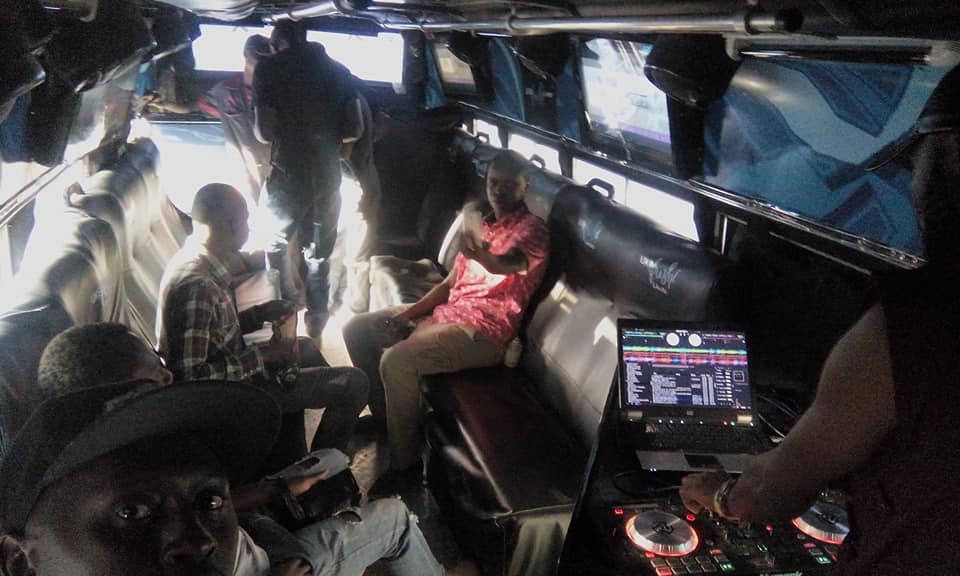
The obvious response is escalation: more elaborate imagery, more equipment, a stronger identity. Yet elaboration also asks more of the people paying for and maintaining it. The spectacle has a balance sheet, even when the spectator cannot see the numbers.
On the Rongai route, TUKO’s reporter observed decorated vehicles attracting passengers and crews competing intensely for them. At the stage, the customer’s attention becomes something that several people want at once. The vivid exterior is one invitation among calls, movement, and the urgency to get a vehicle filled.
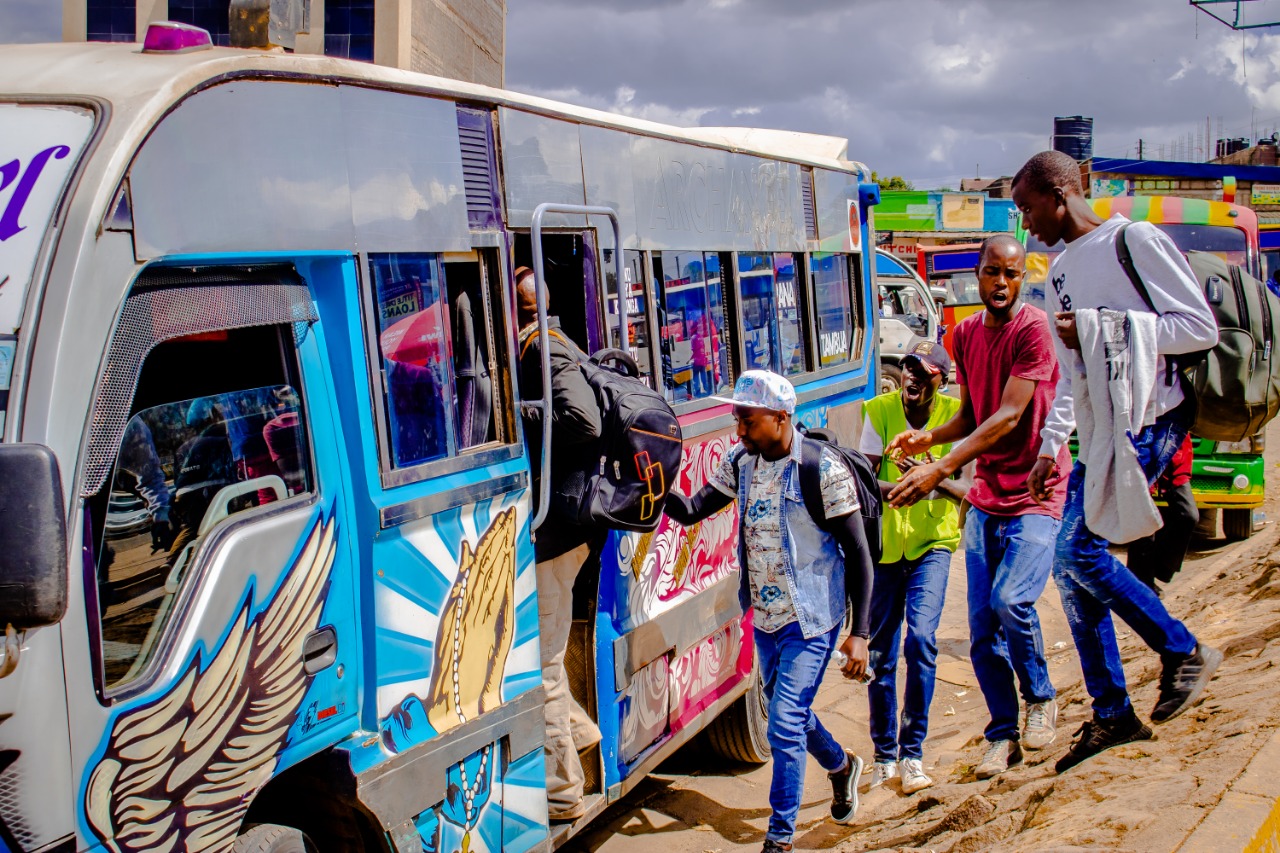
It also reveals the tension within the experience. Enthusiasm and pressure can occupy the same bus stage. The work of filling a vehicle quickly is a business requirement for the crew; for the passenger, it may feel welcoming, exciting, or exhausting.
For an enthusiast, the intensity may be part of the appeal. For someone finishing a tiring shift, the same soundtrack may be an obstacle to a little rest. The passengers do not have to agree. Public transport puts different needs close together, and a strong style makes that negotiation audible.
The question of who controls the volume is therefore as ordinary, and as consequential, as who gets a seat. Enjoying the artistry does not settle what passengers should have to tolerate. A beautiful interior still has to serve the people inside it.
There is another public beyond the passengers. The exterior belongs visually to everyone along the route: people waiting, selling, walking, or looking from another vehicle. They receive the image without buying a ticket.
In that sense, the workshop produces a moving public artwork with an unusual distribution system. Its audience is assembled by traffic rather than an exhibition schedule. The route repeatedly carries it through different parts of the city.
Kenyan artist Dennis Muraguri has made matatu culture a subject of his own prints and other work. His practice offers another movement of the image: the transport world becomes material for art that circulates beyond the vehicle itself. Exhibition account10
The relationship between street and gallery is therefore already active. Recognition need not arrive only when an outside institution discovers that a bus can carry art. Artists in and around Nairobi have been thinking through the subject in several forms.
Naming the vehicle helps an attachment survive the journey. A route number identifies a service; Onyx identifies something a person can remember and talk about. A favourite ride becomes easier to distinguish from all the other trips that blur together. For an owner, that memory has commercial value. For a passenger, it can be one small pleasure in a repeated obligation.
The workshop deserves a place in that memory too. Before the screens are switched on and the portraits pass through traffic, someone has prepared a surface, positioned an image, fitted the upholstery, and checked how one element meets the next. The finished spectacle depends on tasks that ask for concentration rather than applause.
Moha had also trained people who became competitors. Teaching a useful skill can give a learner independence, spreading a workshop’s influence beyond the jobs that still reach its doors.
For a younger maker, the possibility of being good at something people will pay for can carry a particular weight. Praise is encouraging, but another commission makes a stronger promise. It means a talent might become a way of organising a life, supporting a household, or earning a name that customers remember.
The painted body then returns that private ambition to public circulation. It passes people who know nothing of the artist’s first failures or the negotiations over payment. They see an assured image, a joke, a face, a phrase. The work has to stand on what it can make them notice.
The first design was rubbed out; there was still another bus to paint. A finished matatu carries that possibility through Nairobi: that an early disappointment need not determine the work people eventually remember.
Read a commission from three positions
The sources place the same decorated vehicle within different interests. A commission analysis does not need invented prices to make those interests visible. It begins by separating what the artist, owner and passenger are trying to accomplish.
| Position | Documented concern | Unanswered by the image alone |
|---|---|---|
| Moha's workshop | Payment and deposits in his 2020 interview. | The revenue of a different workshop today. [1] |
| Onyx's owner and driver | Entertainment and programming in a May 2026 journey. | The operating costs or profitability of the vehicle. [8] |
| Passengers in The Star's account | Recognition, enjoyment and a Kenyan identity. | The preferences of every commuter. [7] |
On a photograph, follow lettering across a door, window or curved panel. Ask how the vehicle's structure divides the composition. That is a design-reading exercise; it does not identify the artist unless the record does. A strong visual identity also leaves practical questions open, including sound levels, maintenance and whether the service accommodates people who want a quieter ride.