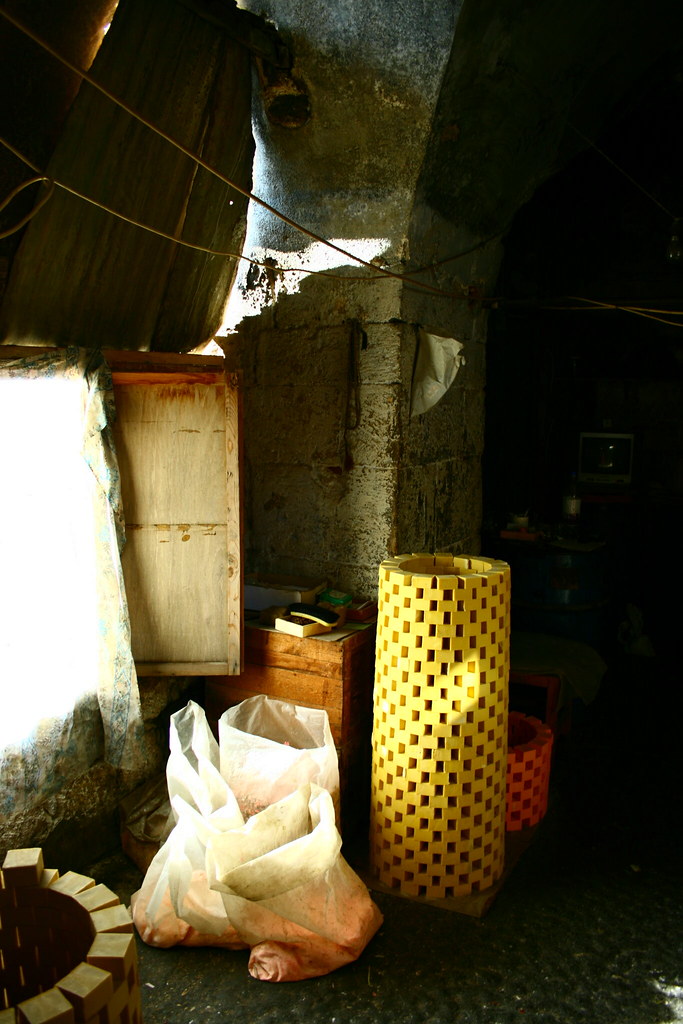
In a 2010 account of a visit to Tripoli, Mahmud al-Sharkass kept working while he welcomed his visitor. Around him stood towers of drying soap. His son Ahmad and his daughters prepared paste; he shaped coloured portions in his hand, leaving the next day for polishing. He also showed photographs of his father making soap in the same workshop in the 1940s. The family resemblance lay partly in the repeated movement of the hands. AramcoWorld1
A photograph holds the older worker still. A trade asks the next person to continue moving. In Tripoli, that continuation can involve familiar tools and gestures, but it also requires decisions no photograph can settle: whether the business will support a household, whether the building can be maintained, whether a child wants to make this work a life.
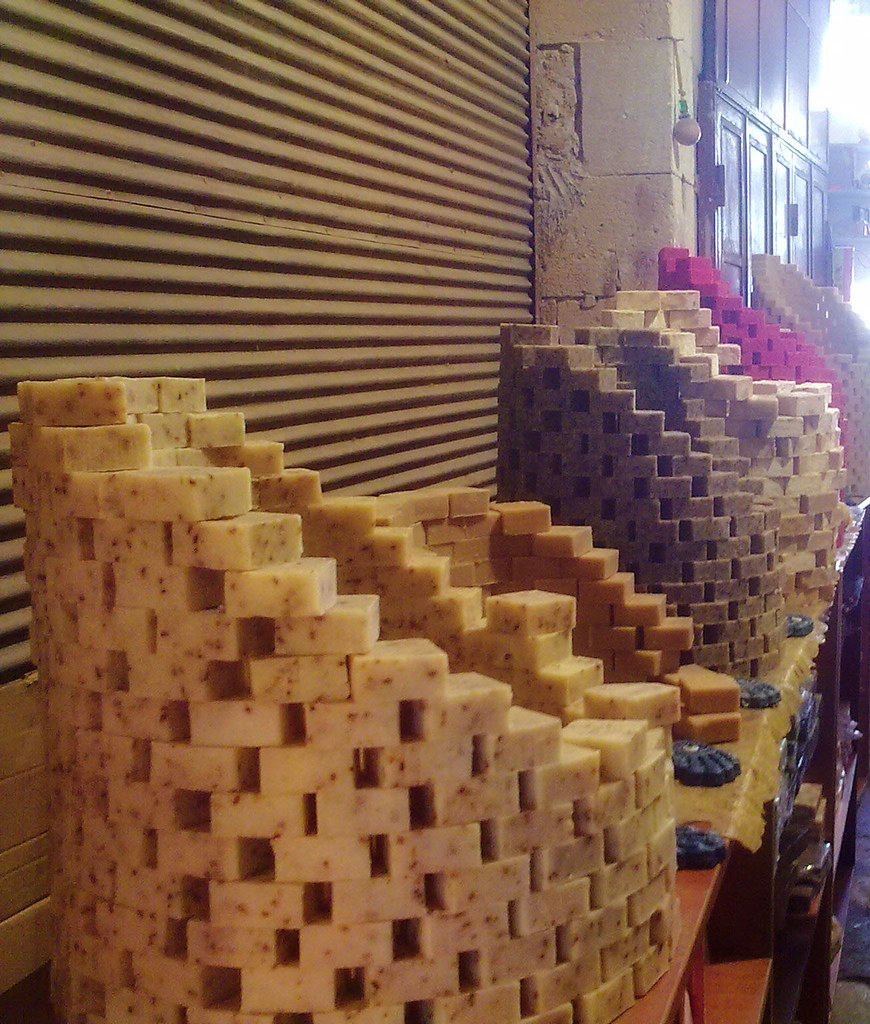
At another of the city’s soapworks, Masbanat Awaida, the family describes leaving its bars to cure for six months. Something that looks finished must wait before being sold. The interval belongs to this producer’s account of its process, rather than a rule governing all Tripoli soap. It makes visible a condition shared across much hand production: the maker commits money and labour well before a buyer appears. Masbanat Awaida2
Tripoli, in northern Lebanon, has a long association with olive-oil soap. Local accounts connect its workshops to the groves of the surrounding hills and distinguish straightforward household bars from perfumed and shaped varieties. The local word for a soapworks, masbaneh, belongs to the vocabulary of a productive city. Tripoli’s soap factories3
The olive tree joins agriculture to manufacture. Fruit and oil have one set of uses; soap creates another. Through that conversion, a harvest becomes something that can be stored, transported, and sold to households far from the grove.
A 2006 report in the Lebanese newspaper As-Safir described this relationship between the olive season and soap production. It also recorded people bringing their oil to Tripoli to have it made into soap, and the pressure that urban development placed on former growing areas. The city’s craft was tied to a landscape that could itself change. As-Safir archive4
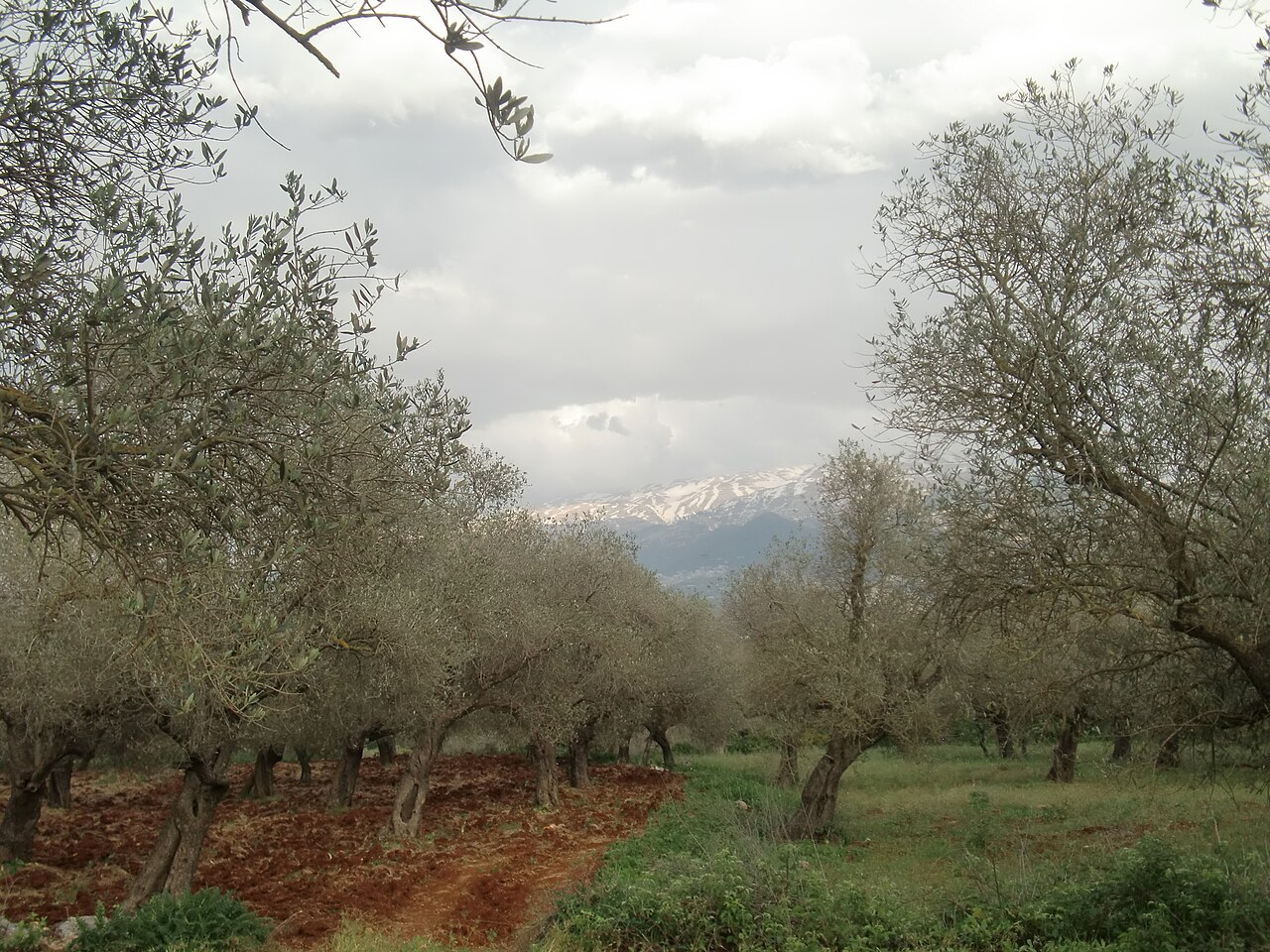
The olive landscape is therefore present in the workshop even when no tree can be seen from the door. A maker needs the harvest to reach the city at a price the business can manage. Familiarity with a recipe does not remove that dependence. The work can remain recognisable while the conditions supporting it change.
This is the distance hidden inside a small bar: from land to oil, from oil to a cooking vessel, from a drying room to a customer’s hands. Each transfer has to happen for the final object to seem ordinary. The maker’s expertise includes understanding where that sequence can slow or stop.
Tripoli’s location helped give those negotiations a wider reach. During the Ottoman period, the city linked a Mediterranean port with an inland trading territory. French merchants were among the foreign traders active there. Goods, tastes, and commercial relationships moved through that network. Tripoli’s Ottoman history5
An aromatic bar therefore belongs to a history of exchange as well as local production. The idea of tradition as something untouched by outside influence fits a port city poorly. Trade can supply both the raw material of an industry and the changing expectations of its customers.
The Khan al-Saboun, the Soap Khan, remains one of the city’s recognisable associations with the trade. Accounts differ over aspects of its early history, but its commercial identity points to an important distinction: making a product and finding a market for it are separate kinds of work. A soap industry needs places where goods can circulate as well as places where they are cooked.
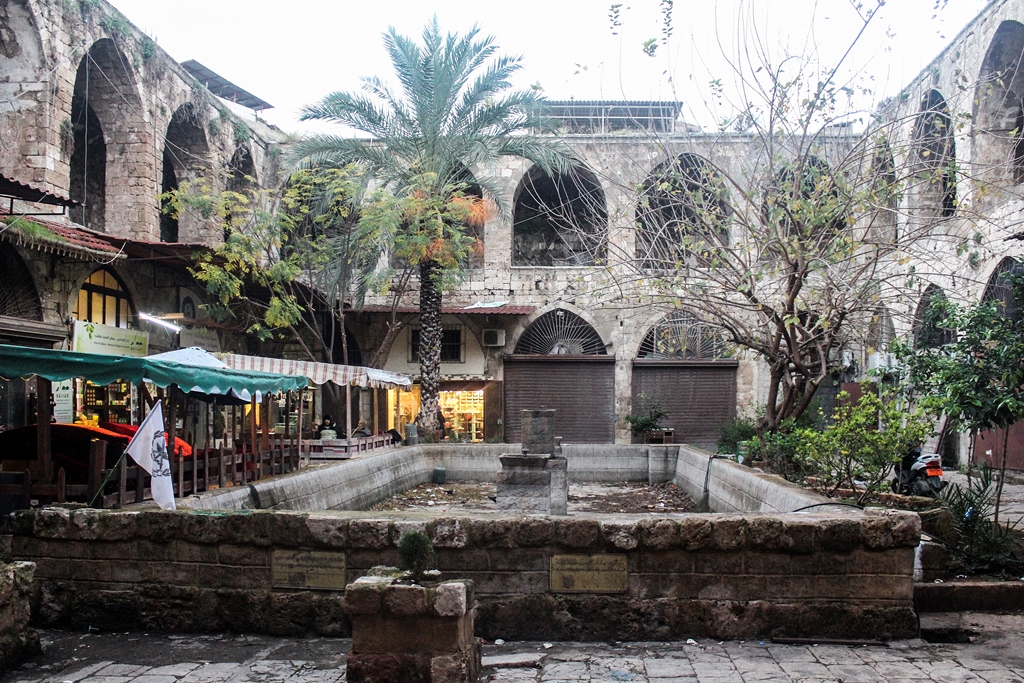
The Awaida works gives the manufacturing side a substantial physical form. A 2023 visitor account describes a three-level Ottoman-style building, with underground oil storage, large cooking vessels, and an upper area used for drying. The arrangement turns architecture into part of the production process. Lebanon Untravelled6
A drying room can appear inactive because waiting does not announce itself as work. Yet the bars occupying it have already cost money. The producer cannot sell the roomful and begin again until the soap is ready. The space holds both future income and the expense of getting there.
According to the Awaida family’s account, the workshop opened in 1880 after a decade of construction. Its current process includes several days of cooking, followed by pouring, cooling, marking, stamping, cutting, and stacking. Experienced workers judge when the material is ready to move from one stage to the next.
The moment of cutting gives that knowledge a particular urgency. Material that is too soft or too resistant does not become easier to handle because a written schedule says it should be ready. The worker must read the batch in front of them. Experience is the accumulated ability to recognise a difference before it becomes an expensive mistake.
For someone learning beside an older relative, instruction can live in those small interventions: wait, try again, feel how this one behaves. What passes between the generations is more than a formula. It is a judgement about when to trust the hands and when to pause. That is difficult to inherit without time spent together.
The underlying transformation is chemical. Soap-making reacts fats or oils with an alkali to produce soap and glycerol. The process, saponification, is well established in chemistry. Hand production does not stand outside science; it applies a material transformation through a particular set of tools and practices. American Chemical Society, Journal of Chemical Education7
The chemistry does not make the family knowledge less interesting. It helps explain why attention matters. An artisan works with materials that change under particular conditions, and experience makes those changes legible. The reassuring word “natural” cannot do that work on the maker’s behalf.
Soap’s everyday usefulness also has a molecular explanation. Its structure includes a water-attracting portion and a portion that avoids water. That combination helps explain why it behaves differently from water alone. The workshop’s familiar object participates in a mechanism most users never need to think about. American Chemical Society8
The waiting also varies. L’Orient Today’s 2023 visit to the Sad-Ein factory recorded a 45-day drying period; a separate visitor account of Awaida gave a minimum of 60 days. Awaida’s own account specifies six months. These are descriptions of particular practices and sources, not interchangeable promises of quality.
A customer may never need to compare those calendars. For a maker, however, an additional month represents more than patience. It means stock still taking up space, money still tied to materials, and another interval before that batch can contribute to the next one.
At Sad-Ein, Nazih Adra had another kind of waiting to contend with. L’Orient Today reported in 2023 that his family’s sandstone factory needed repairs they could not readily fund. His great-grandfather Sadik had bought the building in the 1890s. Its arches connected the business to an admired past; its deterioration created a threat to the people still working inside. L’Orient Today9
The report also described electric machinery and a service elevator. Such additions reveal a family making an old building usable. Preserving a trade can require easing its physical demands, moving a heavy load more safely, or freeing a worker for a task that needs judgement. Age alone is no reason to make the day harder.
A visitor can leave with a photograph of an arch. The owner remains responsible for what it supports. That difference places a limit on the romance of the historic workshop: admiration does not pay for structural work, and a beautiful building must still be a sound place to earn a living.
Nor can every family be expected to shoulder the cost simply because previous generations worked there. The desire to continue may be strong while the means are inadequate. The cultural loss, if a workshop closes, is public; the immediate calculation about another bill can be intensely private.
Sharkass’s workshop offered another view of that shared and private life. The AramcoWorld report found his wife and daughters involved alongside his son, each knowing how to make the coloured soap balls. A family name could conceal several people’s skilled work. Around the same product, they held different positions in the household and the production process.
A 2004 report in L’Orient-Le Jour described Mahmoud Charkass teaching soap-making to his teenage son, who had left school. It also described another family returning to soap after a period in the jewellery trade. These were different responses to continuity, with different costs. L’Orient-Le Jour archive10
The report does not give enough of the boy’s own voice to tell us how he understood that choice. That absence matters. A father may see a valuable skill being secured; a child may see opportunity, obligation, or both. The fact that a trade continues cannot by itself tell the whole story of the person continuing it.
Outside Tripoli, a newer maker gave his soaps a child’s name. Salman Hamzeh, profiled by L’Orient Today in 2022, called his Abay business Rayan after his teenage son. He worked at a bank and made soap in the family home’s basement. His father Atif, then eighty, remembered learning as a boy with his own grandfather, cooking with oil from their land. L’Orient Today, 202211
The same report followed Alia Nasredine, a laboratory employee who began making soap with her niece in 2020 and giving it to relatives and friends. She later worked towards a dedicated workshop. Hamzeh had taught groups of local women. Here knowledge moved between households, opening a possible livelihood to someone whose surname did not already belong above a historic factory door.
These accounts widen the idea of a family craft. The relationship can be between father and son, aunt and niece, a teacher and women in neighbouring villages. A product learned through company may eventually be sold to strangers. The business begins with the hope that what has pleased a small familiar circle can sustain a larger one.
Fragrance adds another route into the product. Awaida’s range includes plain olive-oil soap alongside varieties associated with flowers, herbs, and other aromatic materials. The company describes both as part of Tripoli’s soap-making identity. Awaida’s product tradition12
An unscented household bar and an elaborately perfumed gift invite different relationships. One may disappear into routine; the other may announce an occasion. Both require decisions about how the finished object should be encountered.
The variety also gives customers a role in the craft’s future. Someone buying soap for daily use is asking for a product that can justify repeated purchase. Someone choosing a gift may care more about presentation or an association with Tripoli. A workshop can serve both, but the balance between them affects what it makes and how it spends its time.
For the maker, a change in shape or presentation can be a serious experiment. A gift buyer may discover the workshop through an elaborate piece, then return for ordinary bars. Another customer may find the same embellishment unnecessary. The artisan has to judge what people will actually use and pay for, while keeping the result recognisably their own.
The stamp supplies a final, compact statement of responsibility. It puts a maker’s identity onto something destined to leave the workshop. A buyer may never see the cooking vessel or the room where the bars dried, but can still know whose work has reached the basin.
Use then changes the object. Corners soften. Lettering fades. A carefully made surface loses its sharpness. This is the ordinary completion of a practical craft: the thing does the job for which it was made.
Sharkass showed a visitor his father in an old photograph while the family continued making soap around him. That image holds the story more closely than a claim of timelessness. Someone worked here before. Someone is working here now. Between them lie the daily decisions that make continuing possible.
Compare curing accounts without averaging them
The reported intervals describe different producers and sources. They should not be averaged into one rule for Tripoli soap or ranked as if a longer interval automatically proved a better bar. A useful economic inference is narrower: unsold stock occupies space and ties up resources while it waits.
| Source | Reported interval | How to use it |
|---|---|---|
| Awaida's own account | Six months. | Attribute the title's interval to this producer. [2] |
| The 2023 visitor account of Awaida | At least 60 days. | Retain the difference rather than silently reconciling it. [6] |
| L’Orient Today's 2023 Sad-Ein visit | 45 days. | Keep the factory and reporting date attached. [9] |
To estimate working capital, a researcher would need batch costs, sales timing and inventory figures from a producer. The article does not have those figures, so it makes no profit calculation. The comparison instead identifies what should be measured and why a finished-looking bar is not necessarily ready to finance the next batch.