Eryen Korath was seven when she chose the marimba. Asked why, in a 2023 El Espectador interview, she resisted a grand explanation: she liked the instrument and wanted to learn. Only later did she understand how playing it challenged expectations about women. El Espectador1
That order deserves to be kept. Before she could explain the significance of her place behind the keys, she had wanted to be there. A child’s pleasure began something that an adult would later have to defend.
The mallets ask for attention to a particular task: where to strike, how to keep time, how one part meets another. A player can be absorbed in getting those things right while people around her are preoccupied with whether she should be doing them at all. The disagreement begins outside the sound, but it can shape every opportunity to make it.
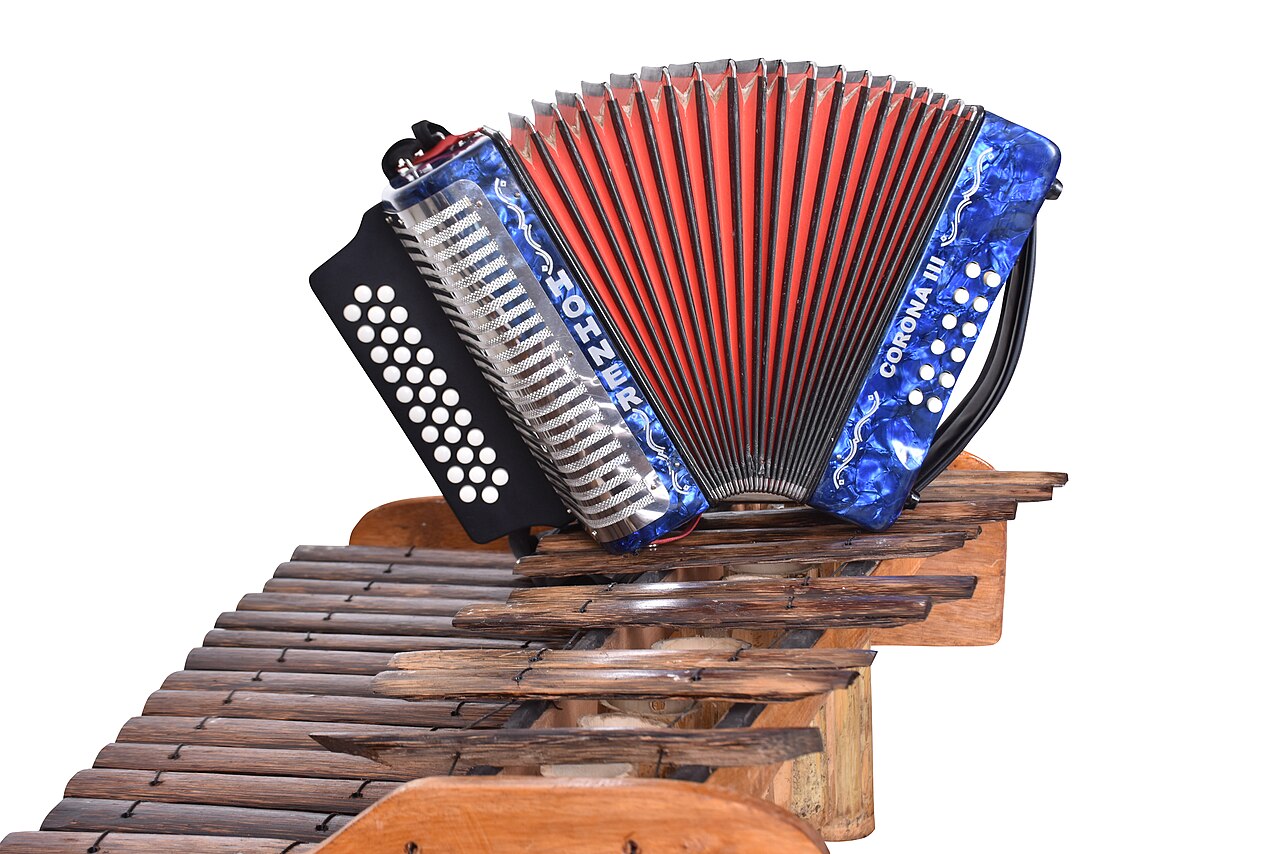
On Colombia’s Pacific coast, the marimba de chonta occupies a central place within a wider culture of music, dance, instrument-making, and gathering. It belongs to a region of distinct communities and musical practices. Its name identifies the hardwood used for the keys; resonators beneath them help give the instrument its voice.
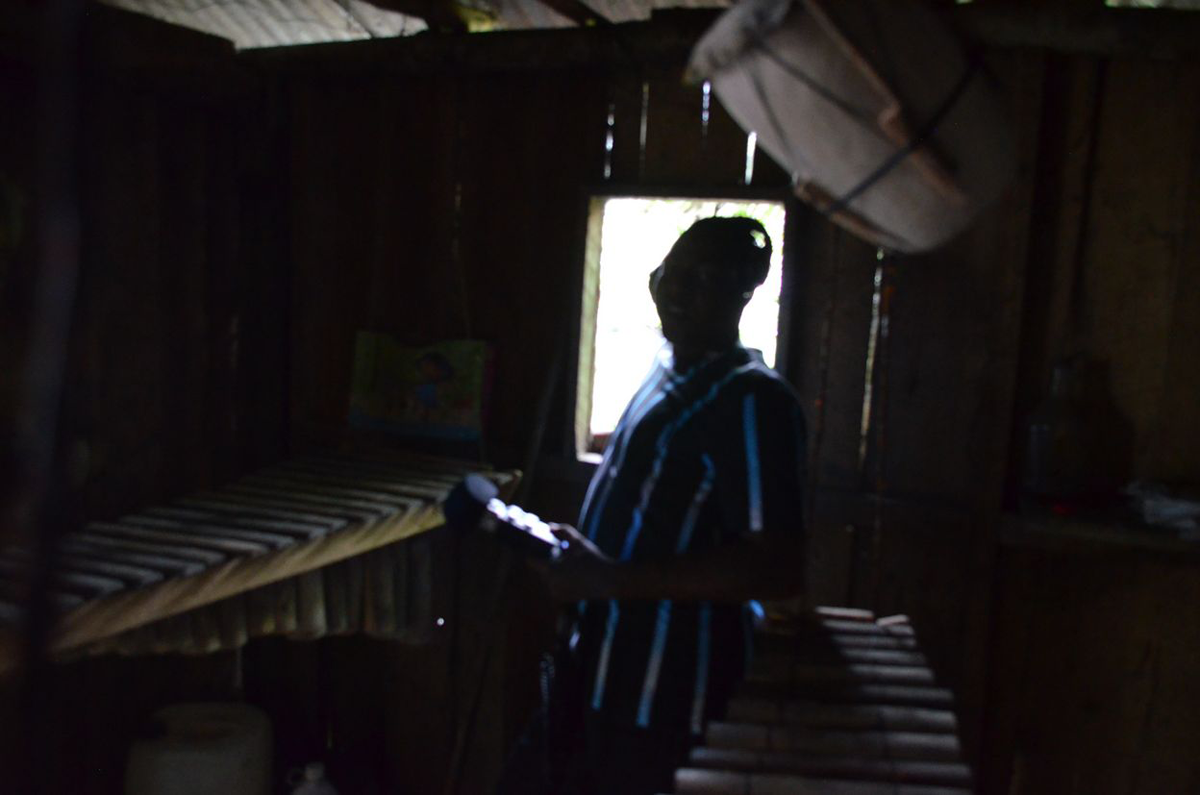
A marimba in the Banco de la República’s collection, made in Buenaventura by Teófilo Potes around 1960, has 23 chonta keys and corresponding guadua bamboo resonators. Its record describes latex-tipped beaters and an instrument played by two people. The object gives a precise example of materials and construction without making every marimba identical to it. Banco de la República collection2
Wood, bamboo, and a player’s strike become a sound that has to meet other sounds. A marimba’s importance does not make it a solitary instrument. Its possibilities emerge within an ensemble and an occasion.
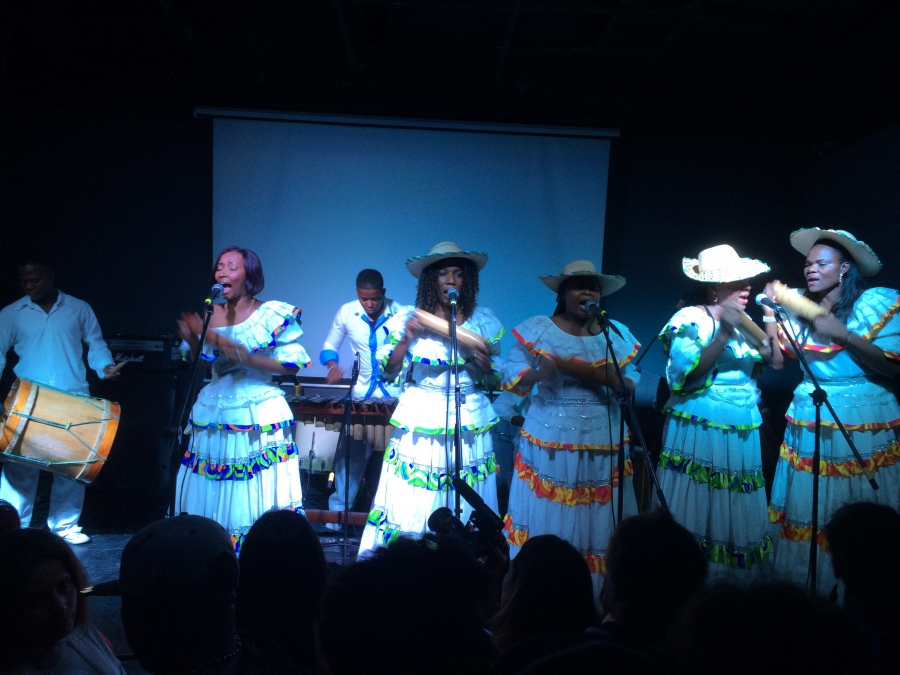
The Smithsonian’s account of Cantadoras del Pacífico describes women’s voices alongside marimba, bombos, and cununos, with singers contributing rhythmic and melodic counterpoint. The musical relationship gives the voice an active place. A singer is shaping the movement of the whole, rather than decorating an instrumental arrangement. Smithsonian Folklife Festival3
Women’s voices were already central to this musical world. Asking who gets to play the marimba therefore opens a question inside a culture women have helped sustain. It cannot be told as their first arrival in the music. Singing, teaching, and organising have supplied much of the work that makes an ensemble and its occasions possible.
The distinction is between being needed and being allowed the whole range of choices. A person can be indispensable in one role and still be discouraged from trying another. Taking up the mallets makes that boundary visible.
The regional research project Corpografías places music within domestic and communal life in Guapi. Its account distinguishes festive marimba ensembles from other practices, including unaccompanied alabaos at adult wakes and songs associated with other ritual contexts. These distinctions matter. “Pacific music” does not describe one sound suitable for every occasion. Corpografías on musical practices4
Knowing a piece includes knowing what kind of company it belongs in. The voice used to accompany mourning enters a different relationship from music inviting dance. A musician learns to attend to the people gathered as well as the notes being made.
In Guapi, Celestina, known as Chela Torres, grew up with a father who made marimbas and a mother who called her to practise singing. In conversations recorded by Corpografías in 2020, the teaching was remembered through verses offered and repeated. María Natividad Caicedo also learned with her mother, listening closely to older singers. The first classroom could be a household in the middle of its work. Corpografías5
Such memories hold more than a method. Being called to sing is an invitation to be heard by someone whose judgement matters. A child’s confidence can grow because an adult takes the effort seriously. The lesson includes the assurance that this voice has a place.
The same household can make some possibilities easier to imagine than others. If girls hear women singing and see men at the instruments, the division can become familiar before anyone states it as a rule. A child who reaches towards another role may discover that curiosity has entered an argument she did not know was there.
Korath’s account does precisely that. In her El Espectador interview, she connected her later commitment to marimba with the possibility of encouraging other women to play percussion. Her own enjoyment had acquired a public consequence.
Being visible does not relieve the musician of practice. A performance must still be learned and carried with other players. The challenge can be doubly tiring when a mistake risks being treated as evidence about women in general, while competence is received as a surprise. The right to try should include the ordinary right to be a beginner.
The history is more complicated than a universal ban followed by a single breakthrough. Reporting from Guapi in 2011 already described women playing marimba, including Wendy Vallejo in the group Marimba de los Esteros. Different places and generations have negotiated expectations differently. El Tiempo archive6
The older report leaves space for lives that do not fit a single breakthrough narrative. A woman may have learned and played for years before anyone outside her community wrote about her. An incomplete public record is not the same as an absence of musicians.
Smithsonian reporting on women marimberas describes Eriyen Korath’s experience of resistance from some older male musicians. It also follows the Red de Cantadoras del Pacífico Sur, whose members teach, organise, and use music to sustain community relationships. These are connected forms of leadership, though they are not identical. Smithsonian Center for Folklife and Cultural Heritage7
A network changes the scale of that permission. Instead of relying on one sympathetic teacher or one household, a learner has other people to approach. For someone made to feel exceptional or unwelcome, finding company can change what continuing seems likely to cost.
Guapi’s Oí Marimba project documented workshops in December 2019 involving Fundación Semblanzas del Río Guapi, Tejiendo Saberes, and local musicians. Its account describes the growth of schools and teaching groups alongside older forms of learning through family and community life. Oí Marimba workshops8
A classroom changes the route into the music. It can offer access beyond what a pupil’s own household provides. But it must also find ways to teach the relationships surrounding a piece: how to listen to a singer, why an occasion matters, when a player supports rather than leads. Some knowledge needs people gathered around it to become clear.
Neither route needs to cancel the other. A lesson can supply focused practice, while a gathering shows how the skill functions among people. The strongest musical education may need both.
The instrument itself carries evidence of relationships with singers. Research publicised by Colombia’s National University describes traditional marimbas tuned by ear, with variation among makers and regions, and connections between tuning and the vocal ranges of cantadoras. Universidad Nacional de Colombia9
That detail brings the instrument close to the human body. A voice has a range in which it can move; an ensemble must find ways to meet it. The singer’s presence affects what other musicians need from their tools. Authority can reside in that practical relationship, even where formal recognition falls unevenly.
For a listener used to a standardised keyboard, difference may initially sound like a problem to be corrected. Listening alongside the singers offers another possibility: hearing how the instrument works in the relationships for which it was made. A judgement formed too quickly can miss the thing that makes a sound belong.
Research on marimba acoustics and performance has examined the relationship between timbre, tuning, and the ways musicians transpose. The point for a listener is straightforward: the instrument’s musical logic deserves to be understood on its own terms. Journal of New Music Research10
Surprise at a woman playing can become a similar distraction. An audience may spend the whole performance noticing who stands behind the instrument, while missing what she does there. Visibility is necessary; sustained listening asks for another step.
A musician deserves questions about phrasing, repertoire, timing, and taste. She may welcome the significance attached to her work and still want people to hear her decisions. Being a symbol of possibility should not become another role from which it is difficult to escape.
Korath’s work as director of Cantares del Pacífico makes those decisions concrete. For the 2023 album Aguajes de Mar y Manglar, the group worked with elders from the Naya, Yurumanguí, and Anchicayá river basins. A ninety-four-year-old woman could not travel to the studio, so equipment was taken to her. The recording included Latin litanies whose knowledge, Korath feared, was disappearing.
That journey reverses the usual demand that a musician arrive where recording happens. The equipment moved because the knowledge belonged to a person who could not. Making her contribution possible required adapting the process around her, rather than letting the limitations of the process decide who would be heard.
Recording can preserve a voice after the encounter ends, but first an encounter must be arranged. Someone has to recognise what another person knows, make contact, organise the practical work, and listen. The archive begins in those acts of attention, before it becomes a file another listener can play.
Nidia Góngora has faced a different question about where an inherited sound may travel. In a 2022 Grammy.com interview, she recalled elders worrying that her electronic collaborations would weaken the music’s roots. She wanted to explore other sounds and take Pacific music to wider audiences. Her childhood already held more than one influence: her mother’s singing traditions and the music from elsewhere played by her father. Grammy.com11
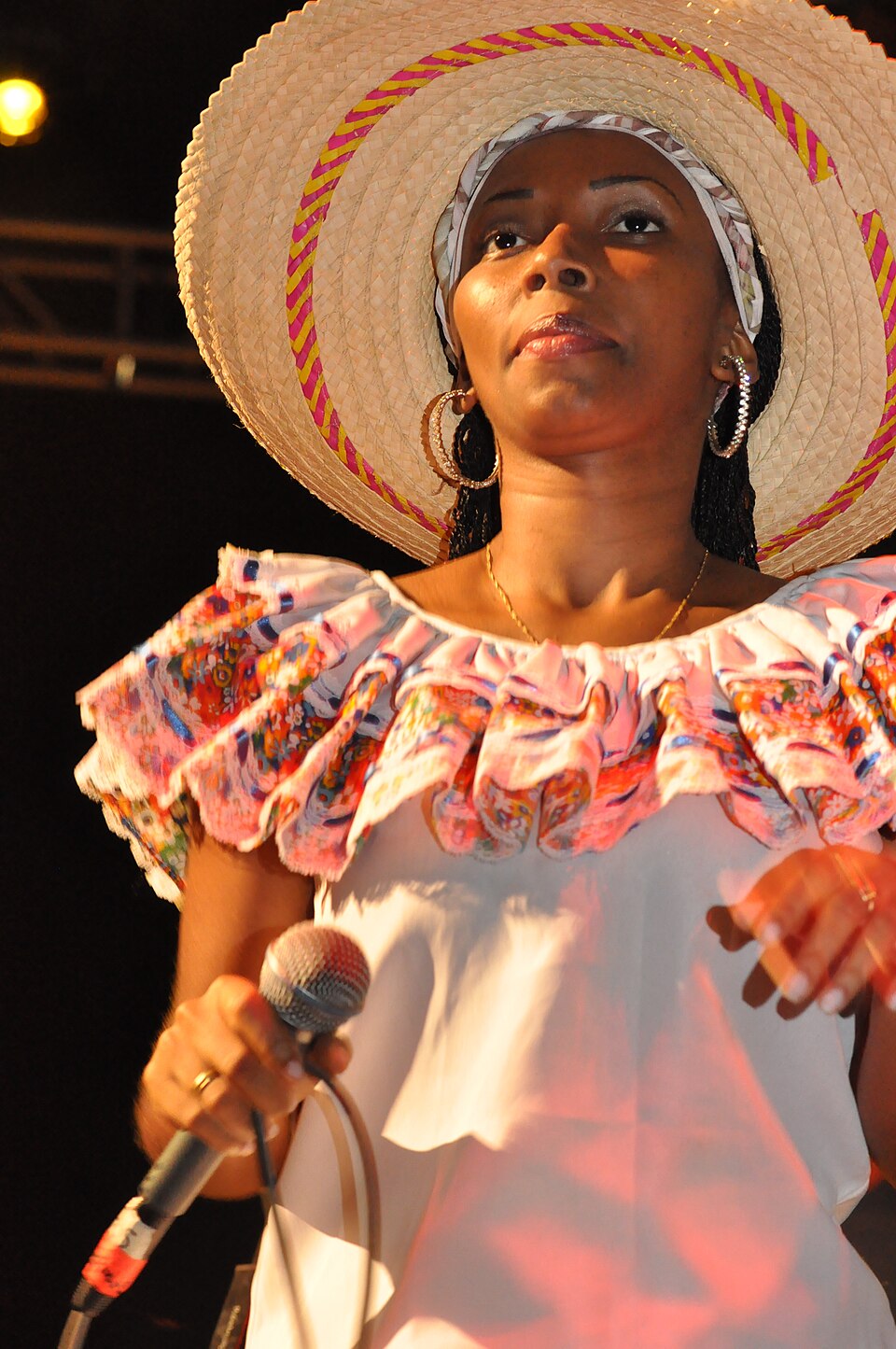
The disagreement is intimate because both attachment and ambition are involved. A younger musician may want the approval of people whose knowledge she values, while also wanting to make something they do not yet recognise. Explaining the experiment can become part of the work. So can accepting that affection does not guarantee agreement.
Góngora’s repertoire also makes room for humour. Discussing La Ñapa, her collaboration with the Bongo Hop, she described a shopkeeper exasperated by unpaid debts and requests for something extra. Everyday bargaining supplied a song. Cultural responsibility leaves room for the pleasure of recognising a familiar human irritation.
Festivals offer another kind of public setting. Cali’s Festival Petronio Álvarez began in August 1997, according to the city’s historical account, and developed categories through which different Pacific musical forms could be presented. City of Cali12
A festival makes another promise: a wider audience, a possible career, a stage a younger musician can imagine reaching. The same format can ask performers to compress a community practice into a timed appearance that will be judged against others. Something is gained, and something has to be adjusted.
Smithsonian reporting records both appreciation for that visibility and criticism of the competitive format among cantadoras. Moving music to a large stage can alter the balance of attention among singers and instrumentalists, as well as the relationship between a piece and its original occasion.
A singer can want that visibility and still question its terms. The difficulty is deciding which changes let the work travel and which pull it away from the relationships that give it meaning. Those decisions belong to the musicians living with the consequences.
Playing is one part of the authority at stake. Choosing repertoire, directing rehearsals, teaching pupils, and deciding whom to record all shape what another generation will hear. A woman’s influence can extend well beyond the moment her mallets meet the keys.
A 2025 San Francisco International Arts Festival programme presented Eryen Korath as a musical director and marimba performer working with Cantares del Pacífico, as well as a lawyer and community advocate. That range of roles offers a fuller portrait than the image of a woman overcoming one barrier. Festival programme13
The names attached to that work matter. A recording can become familiar to listeners who know little about where it began. Credits and the naming of teachers allow curiosity to travel back towards actual people, rather than stopping at a broad category such as “Pacific music.”
The young people interviewed by Corpografías in Guapi imagined futures including mathematics, football, music teaching, and careers they had not yet chosen. They also wanted to keep playing and singing. Cultural continuity did not require their lives to become identical to their elders’ lives.
That is a generous future to make possible: room to pursue the music seriously without asking it to supply a person’s entire identity. A girl can want the instrument because of its sound. She can later choose whether to teach, direct, perform professionally, or keep playing alongside another kind of work.
At seven, Korath did not need a theory of change to know which instrument interested her. She needed the opportunity to stay with that interest. The question in this story begins there, with how readily the next child can be given the same chance.
Separate access, sound, and artistic authority
The evidence complicates the idea of a single breakthrough. Korath's experience, earlier reporting on women players and the roles of cantadoras show different forms of participation. The question is not only who stands at the keys, but who can learn, choose repertoire, teach and decide what gets recorded.
- Who was already playing?
- The 2011 Guapi report alongside Korath's later account. A later profile is not proof of a first-ever woman player. [6]
- How does the instrument meet a voice?
- The National University account of tuning and vocal range. One account does not define every marimba's tuning. [9]
- Who controls the record?
- Korath's account of taking recording equipment to an elder. A recording credit cannot recover every contribution by itself. [1]
Compare the marimba and voice in a named recording before comparing performers as symbols. Follow the moment when one supports or answers the other. Keep a festive ensemble distinct from alabaos and other occasions described in the sources. Eryen is the spelling used here; the linked Smithsonian account also uses Eriyen for Korath.
Sources and further reading
- El Espectador
- Banco de la República collection
- Smithsonian Folklife Festival
- Corpografías on musical practices
- Corpografías
- El Tiempo archive
- Smithsonian Center for Folklife and Cultural Heritage
- Oí Marimba workshops
- Universidad Nacional de Colombia
- Journal of New Music Research
- Grammy.com
- City of Cali
- Festival programme