The suitcases did not make it to the show. Recalling a 2022 appearance in Rome, the Kinshasa collective Fulu Miziki described building instruments backstage after equipment was lost in transit. Their instruments were already handmade from recovered objects. Now the ability to make them again had become part of being able to perform at all. Connect Everything Collective interview, 20251
A missing instrument exposes an awkward distinction. The player may know a piece perfectly and still lack the thing that makes it possible to play. For these musicians, the answer can involve another search through ordinary materials: plastic containers, metal, tubing, parts with lives before music. The work begins before the audience hears anything, with deciding which objects can be persuaded into the sound the band needs.
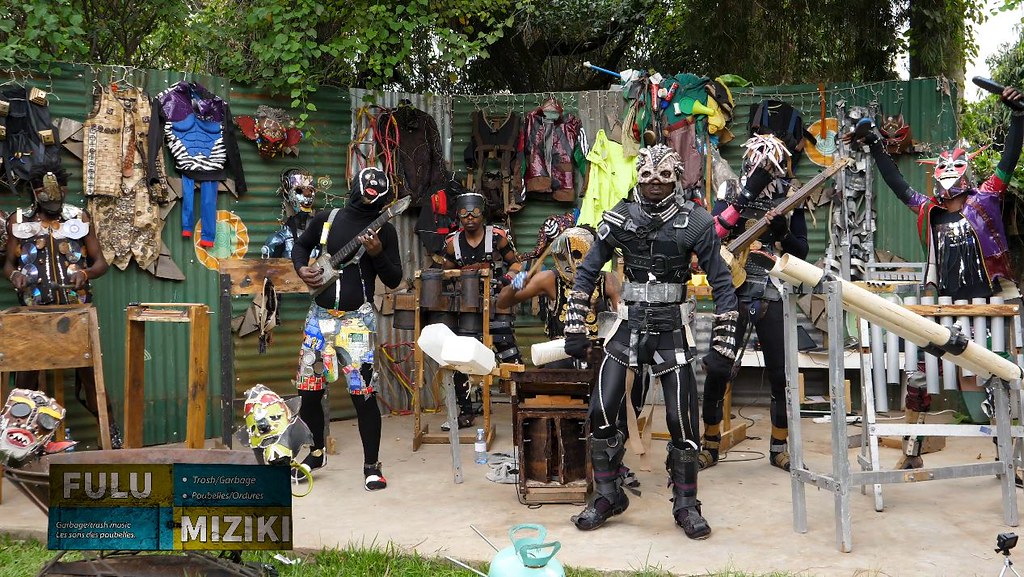
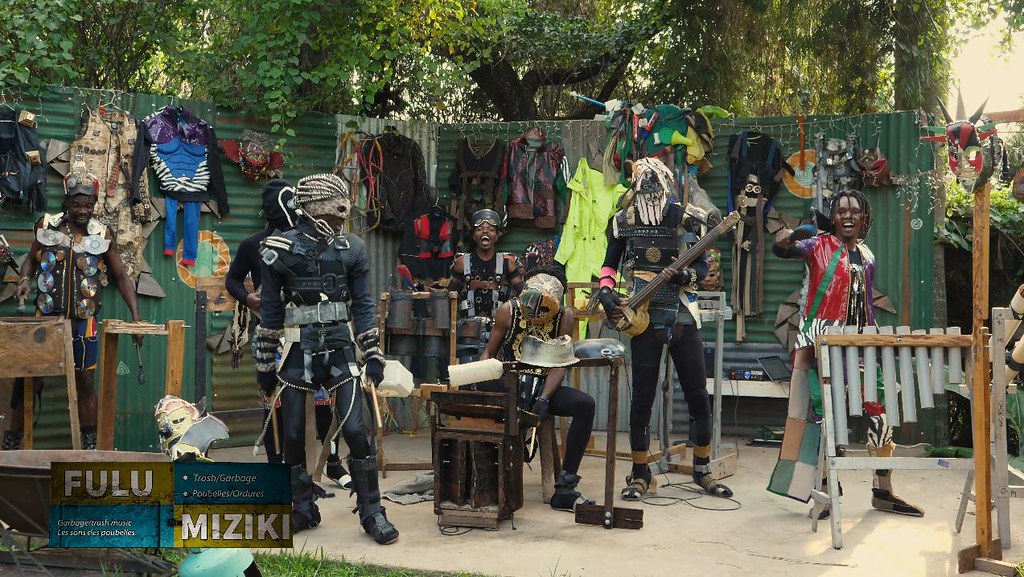
Fulu Miziki have built an international reputation through this approach. Interviews describe instruments made from materials including PVC tubes, plastic jerrycans, and bicycle parts, alongside costumes and masks assembled by the performers. Their work extends into workshops introducing young people to instrument-making. The same material can become something to play, something to wear, and something through which to teach. Afrique Magazine, 20252
The surprise of seeing these materials onstage is part of their force. A jerrycan remains recognisable after becoming an instrument. It brings its ordinary associations with it. The player has to make an audience hear past that recognition, towards the relationship between a particular tone, a voice, a beat, and the rest of the band.
That asks for more than resourcefulness. It asks for taste. An object may produce a loud or amusing sound and still have no useful place in the music. The maker has to reject possibilities as well as discover them.
Kinshasa offers these artists a substantial musical inheritance. In a 2020 interview, Fulu Miziki named Congolese performers including Franco, Pépé Kallé, and Zaïko among their influences, alongside Michael Jackson and American hip-hop. They described a path through rumba and hip-hop towards making instruments from recovered objects. Their songs concerned politics and ordinary life, work and love. RetroFuturista interview3
But gathering discarded material did not always feel comfortable. In the same RetroFuturista interview, the musicians recalled their initial unease in a city where la Sape, the culture of conspicuous elegance, shaped expectations of how a successful performer should look. Making things from rubbish meant confronting their own ideas about appearance. They had to become comfortable being seen doing it.
That admission brings the experiment closer. Before it can become a striking costume on an international stage, a new direction may involve looking foolish to people whose opinions matter. An artist does not stop wanting respect because the work challenges conventional measures of it. Finding an appearance of one’s own can require living through a period in which other people do not yet recognise what one is trying to become.
Asked by The Quietus in 2025 why they built their own instruments, Fulu Miziki gave a precise answer: “we want something true to us.” Their search began with dissatisfaction with available sounds. They described finding an object before knowing where it would fit, allowing the encounter to suggest a use. The Quietus4
Consider the difference between obtaining an instrument and inventing one. An established instrument arrives with a history of techniques, however much a player later departs from them. A new construction may demand that the maker develop the playing method alongside the object. Where should the hands go? What action produces a repeatable result? How much force will the material tolerate?
Those questions make a workshop into a rehearsal space. They also make rehearsal a form of design. The object is not finished simply because its parts stay together. It has to prove useful in the company of other sounds.
The wider scene contains several distinct projects. KOKOKO! brought together Kinshasa musicians and instrument-makers with the French producer Xavier Thomas, known as Débruit. In a 2019 interview, Thomas described meetings and collaborative sessions that preceded his introduction of electronic equipment. He also distinguished the group’s touring presentation from Kinshasa performances involving dancers and other artists. The Berliner5
That difference between a local gathering and an international stage deserves attention. A touring band has a set length, transport requirements, and a particular collection of performers. A neighbourhood event may involve a much wider circle. The exported version is a real artistic work, but it cannot stand for every relationship that helped produce it.
It is tempting to make a single celebrated group representative of an entire capital. Kinshasa is far too large, and its musicians too various, for that. The more useful story is about a set of encounters within the city: people hearing one another, exchanging possibilities, and choosing different directions.
Writing in 2025, Pan African Music traced connections among artists including Bebson de la Rue, Pisko Crane, Fulu Miziki, and KOKOKO!. Its account situates recovered materials within a broader field of sculpture, performance, and musical invention. An instrument-maker belongs to a creative neighbourhood as well as a band. Pan African Music6
Costume belongs to the same work of choosing an identity. A performer wearing an object changes its scale and purpose again. What lay unnoticed on the ground can dominate the outline of a body. Making the audience look becomes a first step towards asking it to listen.
Yet the artists’ explanations of discarded materials are not interchangeable. Speaking to Band on the Wall in 2019, KOKOKO! emphasised the original need to obtain instruments they could not afford. Environmental implications grew from that situation, rather than supplying its entire initial purpose. Band on the Wall interview7
Fulu Miziki’s ecological concerns sit beside that account of necessity. The shared materials do not erase the difference. One musician may be searching for an affordable means to play; another may be trying to find a tone that available instruments do not offer. The same person can care about money, originality, and the environment at once.
The cost of equipment is therefore part of the story without becoming a romance about poverty. A listener can admire what musicians have made and still wish they had easier access to the tools and opportunities they want. Their skill belongs to them. Difficulty does not deserve the credit for it.
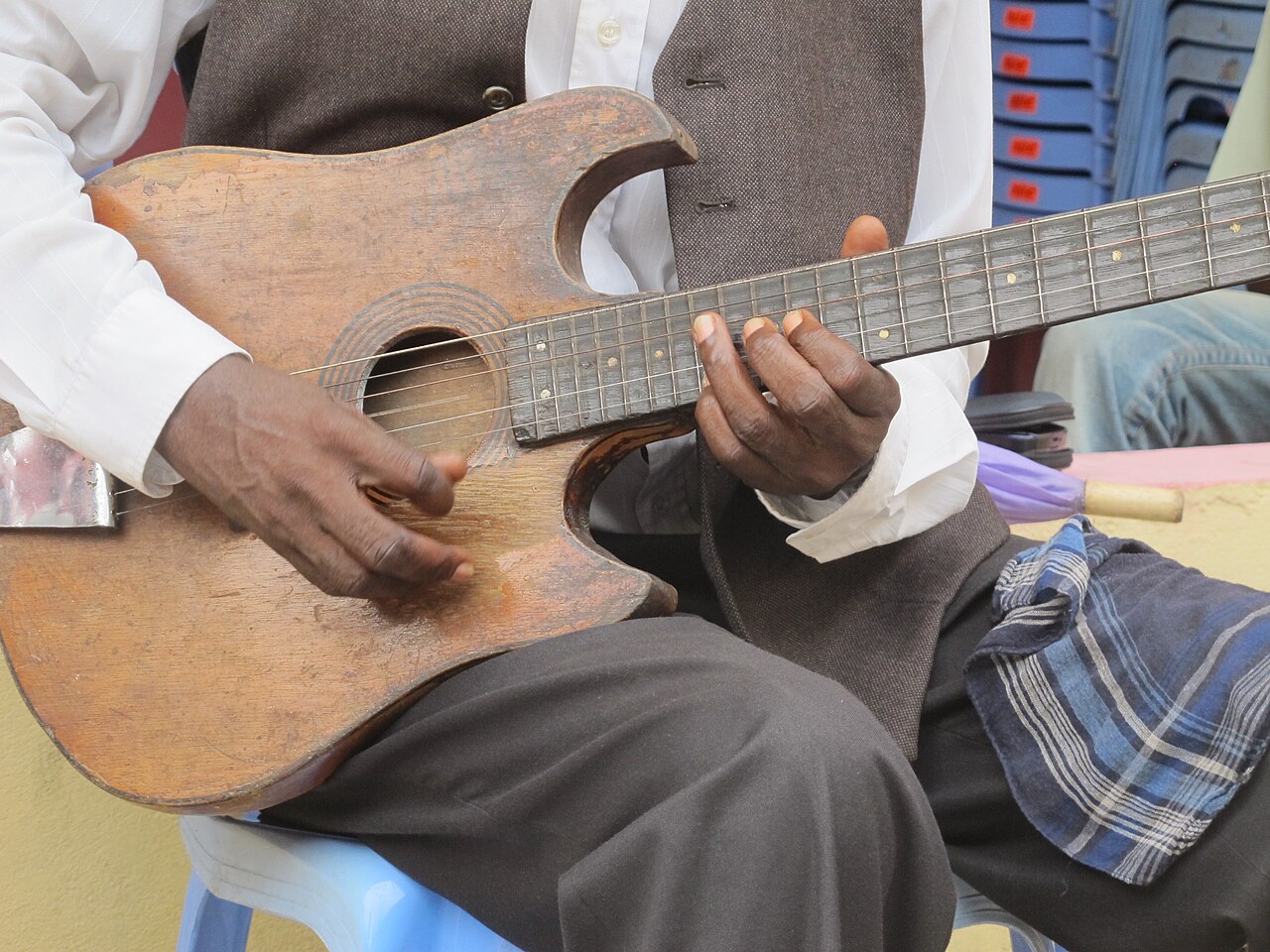
It also does not require imagining that conventional instruments would make their invention obsolete. Once a musician has developed a distinctive sound, it has artistic value beyond the circumstances of its first construction. What begins as a practical response can become a deliberate preference.
KOKOKO! offered a particularly mischievous example in a 2019 Flaunt interview: a typewriter yielding three percussive sounds. They also described a device built around a cassette player and a shower hose. Those details bring the experiment down to a human scale. Someone has looked at a familiar mechanism long enough to ask an unfamiliar question about it. Flaunt interview8
A typewriter already contains rhythm in its original use. The musician listens to that rhythm with another intention. The conversion makes an ordinary mechanical action available to composition, separating it from the task for which the machine was sold.
The question changes what counts as expertise. Knowing the proper use of a device may be less useful than listening carefully to what happens when it is handled differently. The musician is working against the authority of the instruction manual, but still answering to the object’s physical limits. An exciting idea must eventually withstand the pressure of a hand.
Those limits can interrupt a performance. Fulu Miziki told RetroFuturista that their instruments sometimes broke onstage; replacing one meant a different sound and a rapid adjustment. The piece had to continue with what was now available.
For a player, this is a particular kind of exposure. Practice creates the hope that the hands will find what they expect. An unreliable instrument withdraws that promise. The musician has to notice the change, respond, and keep enough attention on the other performers to remain with them. Inventiveness becomes something exercised under pressure.
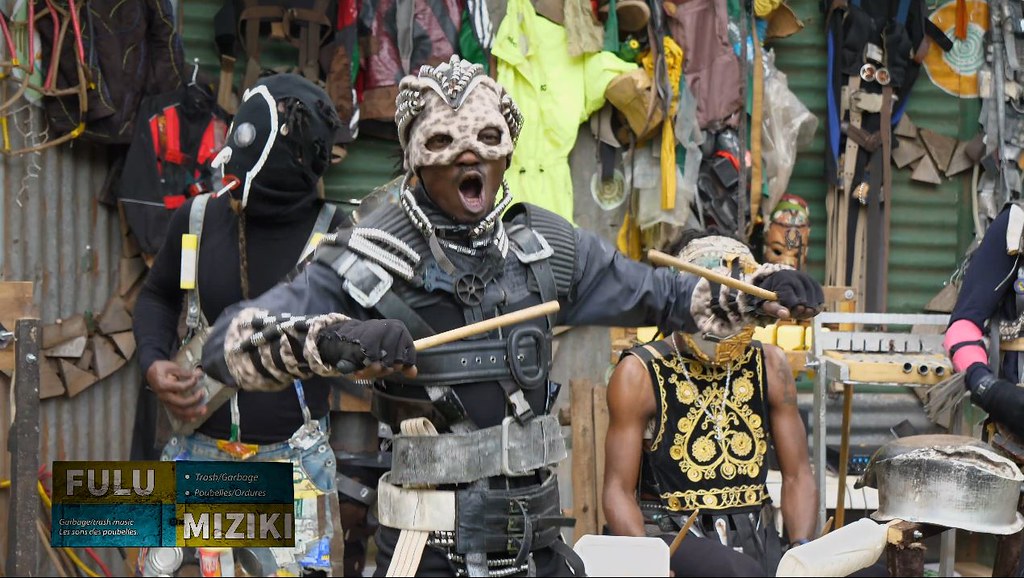
The ensemble is crucial. One player’s unexpected change becomes information for everyone else. The band has to keep listening while it keeps moving. A performance makes invention public, with consequences that cannot be postponed until the next workshop session.
In 2024, a Grammy.com interview about KOKOKO!’s album BUTU gave another view of the music’s development. Makara Bianko described influences ranging from Congolese rumba and ndombolo to older rhythms and music from elsewhere in Africa. The discussion also connected the group’s vocal energy with Kinshasa’s public soundscape and the tensions voiced in its songs. Grammy.com9
Bianko’s account makes listening an active part of growing up in a musical city. Influences do not arrive neatly separated into a family tradition and a foreign addition. A singer can carry several kinds of music at once, finding ways for an older rhythm to live beside an electronic sound. The decision belongs to the person making the new piece.
Descriptions of Kinshasa often reach for “chaos” when confronted by this intensity. The word does little to explain how musicians make it work. A repeated figure has to hold its place. Another player has to know when to enter. A voice can sound urgent because its timing is controlled, even when the whole performance feels close to overflowing.
Listening more closely changes the questions. Which part establishes the pulse? Which sound interrupts it? When does a voice become another rhythmic instrument? What happens when a pattern continues long enough for a small variation to become enormous?
The musicians also make a straightforward request of their audience. Ahead of a festival appearance, Fulu Miziki told The Quietus to bring dancing shoes and remember to drink water. The advice is funny because it is practical. Whatever meanings a listener brings to the recovered materials, the band intends a physically demanding good time. Enjoyment is one of the things the work has been built to deliver.
A dance floor offers a different kind of recognition from a photograph. The audience has to respond over time. A costume can catch the eye immediately; a groove has to keep the body interested. Attention passes between musicians and listeners in the changes that sustain that interest, an encounter no caption about recycling can supply.
The names and formations behind this music have changed. Pisko Crane’s work, Fulu Miziki’s different incarnations, and KOKOKO!’s collaborations belong to overlapping histories, rather than a single fixed ensemble. Following those changes gives the artists room to develop. A spectacular early image should not oblige its maker to repeat the same proposition indefinitely.
Touring adds unfamiliar audiences, practical obstacles, and the chance to hear what travels well. It can also make the original question more insistent: which parts of this work are ours because of how we made them, and which can change? An invented instrument provides one answer at one moment. The next broken part or unexpected find can open the question again.
In their 2025 interview with Connect Everything Collective, Fulu Miziki described removing their masks during shows so audiences could see their faces. After all the work of transformation, they wanted that ordinary recognition too. The materials catch the eye; the faces belong to the people who made them speak.
Keep the ensembles and their explanations distinct
Recovered materials connect several projects, but they do not give all the musicians the same history or intention. The useful comparison follows what the artists say and how each account locates the work. It does not turn every Congolese ensemble pictured here into one band.
| Account | Specific emphasis | Do not infer |
|---|---|---|
| Fulu Miziki in RetroFuturista | Appearance, influences and instruments that can break in performance. | That every repair reproduces the same sound. [3] |
| KOKOKO! in Band on the Wall | Access to instruments and the circumstances of making. | That necessity explains every later artistic choice. [7] |
| Fulu Miziki in Connect Everything Collective | Rebuilding after lost equipment and revealing faces during shows. | That costumes make individual musicians interchangeable. [1] |
Listen to a repeated pattern before looking for the object that produces it. What does it contribute to the ensemble: pulse, interruption, pitch or texture? The question makes the sound an artistic decision rather than a demonstration that rubbish can be reused. Identify the recording and group before attributing any instrument to a particular performer.