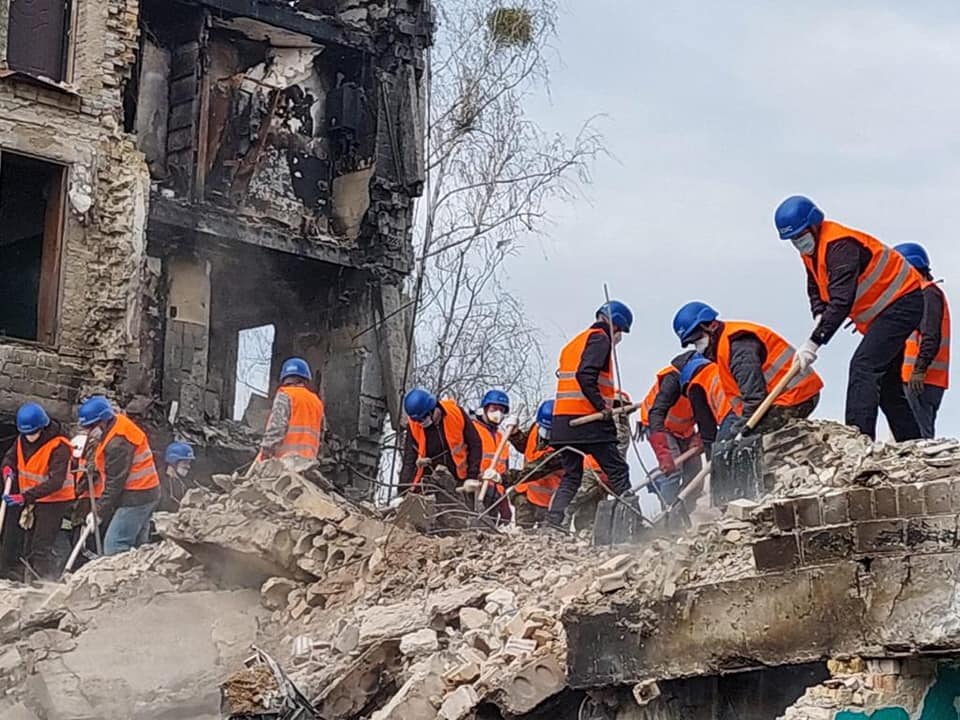
In the summer of 2022, a DJ played beside the ruins of a cultural center in Yahidne, a village in Ukraine’s Chernihiv region. Volunteers shifted debris to electronic music. The equipment rested on ammunition boxes.
Associated Press reporter Justin Spike described more than 200 young people joining that cleanup. The building had been hit during Russia’s assault on the area earlier that year. For the volunteers, the day combined hard physical work with a sound associated with evenings out.1
The images traveled easily: dancing, dust, a shattered building, a gathering of young people determined to do something useful.
Stay with the story a little longer, though, and different details begin to matter. Who decides which house needs attention first? Where do usable bricks go? Who knows how a damaged roof was put together? What makes someone get on the bus again the following weekend?
Repair Together, the initiative behind these gatherings, becomes more interesting as those practical questions come into view.
Its work also connects with an older Ukrainian idea: a large task can become possible when people arrive together, bringing their labor and accepting a place in a shared undertaking.
An old word for coming to help
The word toloka describes a traditional form of communal work. A Ukrainian dictionary entry preserved by Borys Grinchenko Kyiv Metropolitan University defines it as a gathering of neighbors, relatives, or friends to complete a substantial task, with food offered rather than wages. The examples include building, fieldwork, and digging a well.2
A dictionary cannot capture every local custom, but it does preserve a social arrangement: someone has a job too large to manage alone; other people come; the work and the gathering belong together.
The idea helps place the repair raves in a longer cultural context. Music and shared food fit readily into a day that combines usefulness with company.
There are differences, of course. A busload of volunteers from Kyiv may arrive without knowing the residents they will help. Some participants bring skills learned in offices, design studios, or music venues. The relationship has to begin during the work itself.
That makes the encounter worth looking at closely. A tradition can provide a familiar way to think about cooperation while people adapt it to new distances, technologies, and needs.
The old word does not make the coordination automatic. Someone still has to arrange transport, find the tools, and know whom to call.
Before the photograph, a group of friends
In a 2024 interview with the architecture magazine MAJA, Repair Together cofounder Daria Kosiakova described friends who had enjoyed traveling and partying together before the full-scale invasion.
An early gathering helped an animal shelter in Hostomel. Seeing the destruction in the Chernihiv region then brought home the scale of the work needed there. The group’s activities developed around clearing debris, repairs, and opportunities for people to spend time together.3
The friends did not have to discard everything they knew about bringing people into a room. Organizing a gathering involves invitations, timing, communication, and an atmosphere people want to return to. Those abilities could now serve a different purpose.
Music helped make that invitation recognizable.
A December 2022 account by United Nations Volunteers described participants with backgrounds in music, design, and DJing. Organizer Marina Grebinna emphasized the familiar faces who kept returning. The ambition was to make volunteering something people incorporated into their lives.4
The return matters. A single dramatic day can attract attention, but rebuilding asks for repeated commitment. A person who comes back may remember the route, recognize a resident, or know which task they can do well.
Over time, the introduction at the beginning of the day becomes a greeting.
What happens to the bricks
Reporter Maria Smyk followed Repair Together to Lukashivka in July 2022. Her account, first published by Rubryka and republished by Transitions, describes local residents recognizing the arriving buses. One woman wanted to know whether her favorite volunteer had returned.
At a work site, people passed bricks along a line. Intact ones went into one pile; broken pieces went into another. Wheelbarrows carried debris away. Organizers circulated with gloves and shovels, attending to practical needs and to residents confronting what had happened to their homes.
Some volunteers were experienced in trades such as carpentry. In other cases, homeowners knew what needed doing and directed the work themselves.5
That last detail changes the picture of who is helping whom. A resident can need extra hands while knowing far more about the building than the newcomers do.
A good repair effort makes room for that knowledge. It asks questions. It recognizes that ownership includes memories and preferences as well as a name on a document.
Sorting the bricks also gives the work a particular texture. A ruined house is not one undifferentiated pile. Materials have different futures. Someone has to look, decide, and handle them accordingly.
The task is physical, but attention shapes how it is done.
A house has a life around it
The AP report included a resident named Nina, then 68, who explained that replacing damaged doors and windows was beyond what she could afford on her pension. Volunteers had helped with repairs.1
That account gives the wider project a household scale. A window is a specific expense. For someone with a limited income, it can stand between having a damaged room and being able to use it comfortably again.
Housing stories also have different timelines. Clearing debris, stabilizing a structure, replacing a roof, and finishing an interior are separate stages. A photograph from one of them cannot tell us that the whole job is done.
Ukraїner’s 2023 reporting on reconstruction in the Chernihiv region distinguishes Repair Together’s weekend work from its longer construction camp. Its September snapshot described 25 buildings at various stages of reconstruction. The wording matters: work underway is a meaningful achievement with further work attached.6
This slower account can be more useful than a triumphant before-and-after. It shows why volunteers need funding, experienced builders, and sustained organization.
It also leaves room for the people waiting. Their lives do not pause neatly between the photograph of the damage and the photograph of the finished home.
A camp with chores of its own
The project’s 2023 construction-camp program imagined a longer stay in the region, bringing building work together with workshops, films, and music. The published plans also emphasized reusing materials.7
By the time of Kosiakova’s MAJA interview, she described volunteers in Lukashivka sharing accommodation with meals, showers, laundry, and internet access. Participants contributed to cooking and cleaning as well as construction.
She also described Velyke Divnytstvo, an initiative challenging assumptions about women’s place in building work. At the time of the interview, its team was constructing a home for a woman who had lost hers in the war.3
These details widen the meaning of a building project. Keeping volunteers housed and fed is part of making the construction possible. So is creating a setting where a newcomer can acquire a skill without being dismissed because of who they are.
A shared house brings its own negotiations. The workday may end, but dishes still need washing. Community includes those small obligations, not only the moments that make an appealing photograph.
The camp also gives people more time to learn. A short visit can establish a connection. A longer stay can turn an unfamiliar task into something a participant understands well enough to do with confidence.
Another beginning, in Kramatorsk
Repair Together belongs to a wider history of Ukrainian volunteer reconstruction.
Building Ukraine Together, often known by its Ukrainian abbreviation BUR, traces its beginnings to 2014. Its own history describes volunteers replacing windows in Kramatorsk and rebuilding homes in nearby Semenivka after fighting in eastern Ukraine.8
The organization’s partner Razom describes an early Kramatorsk camp where volunteers rented a house with a garden and invited local young people to evening gatherings, film screenings, and conversations. Construction created a reason to arrive; the time afterward allowed different relationships to develop.9
One lasting result was Vilna Khata, a public space in Kramatorsk. Ukraїner’s 2020 account connects its beginnings to the 2014 volunteer camp and describes knowledge later shared with activists in other eastern Ukrainian cities. People who had first come together around repairs wanted a place to keep meeting and making things happen.10
This earlier story helps explain why a cultural space can become part of reconstruction. Finishing a repair does not exhaust the possibilities of the people who met while doing it.
The room that remains available afterward may support a new project, an argument, or a friendship. It gives the connection somewhere to continue.
What a cultural center contains
“Cultural center” can sound abstract until we look inside a particular building.
In Okhtyrka, the People’s House dates to the early twentieth century and was renamed the House of Culture in 1932. Ukraїner’s July 2024 report describes a place used for local events and youth activities. Before the full-scale invasion, improvements included lighting, sound equipment, and a recording studio.
Russian aerial bombing damaged it on March 8, 2022. Subsequent work included protecting the structure and creating a multifunctional shelter used for activities such as workshops and a chess club. The building also served as a center for collecting and distributing aid.11
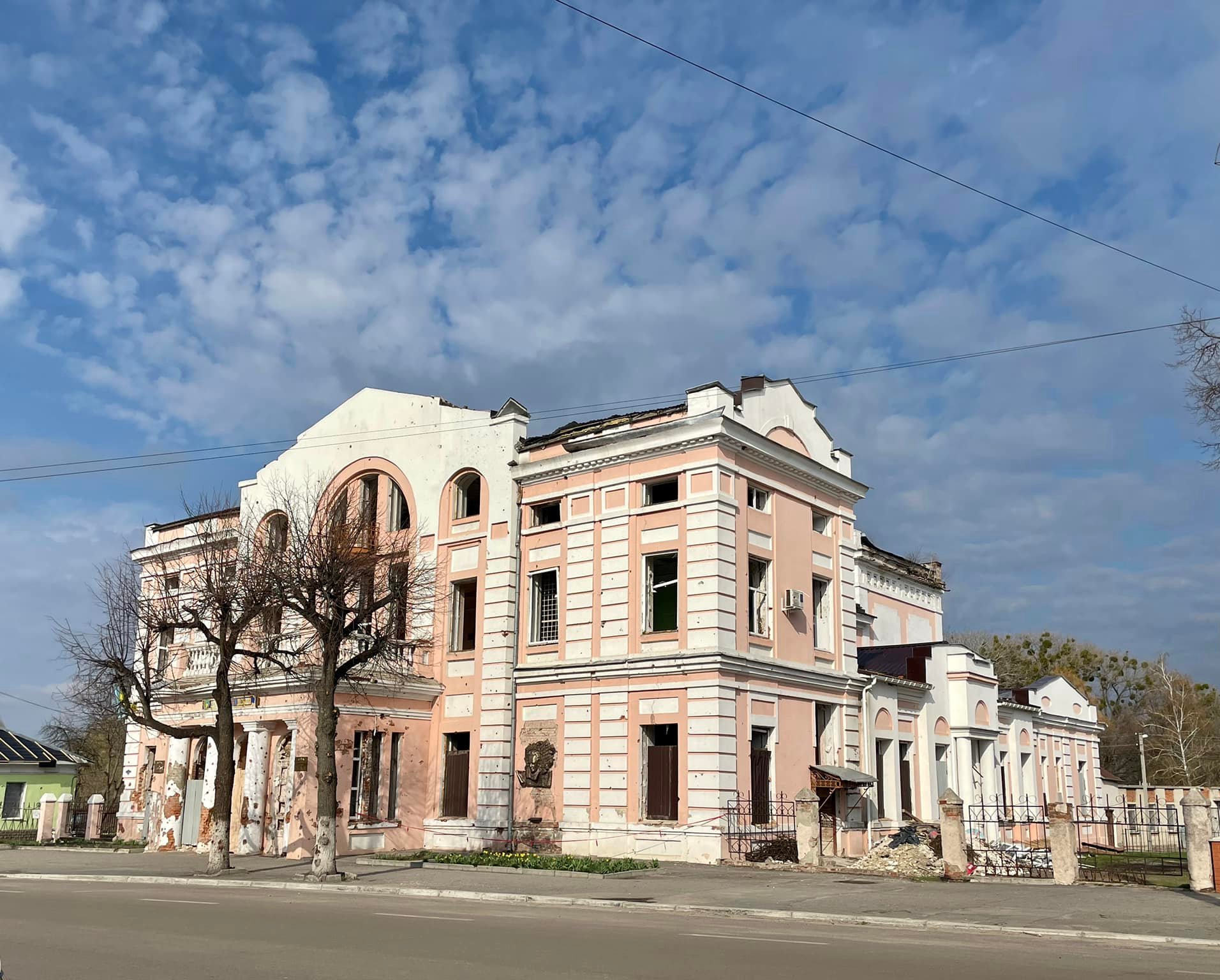
Those uses give a building its importance. Sound equipment suggests performers and rehearsals. A chess club suggests people returning often enough to recognize one another’s habits. An aid collection point works partly because residents already know where it is and what it means in local life.
A cultural building can contain a history without being frozen inside it. Its rooms acquire new purposes as circumstances change.
Preserving it therefore involves more than a facade. The people using it need a way back in, and reasons to keep coming.
Remembering while rebuilding
Yahidne’s history makes that relationship between place and memory especially difficult.
In March 2022, Russian troops confined hundreds of residents in the basement of the village school. Reporting by TIME documented the overcrowding, deprivation, and deaths during the captivity. The school became a site whose meaning extended far beyond its earlier everyday use.12
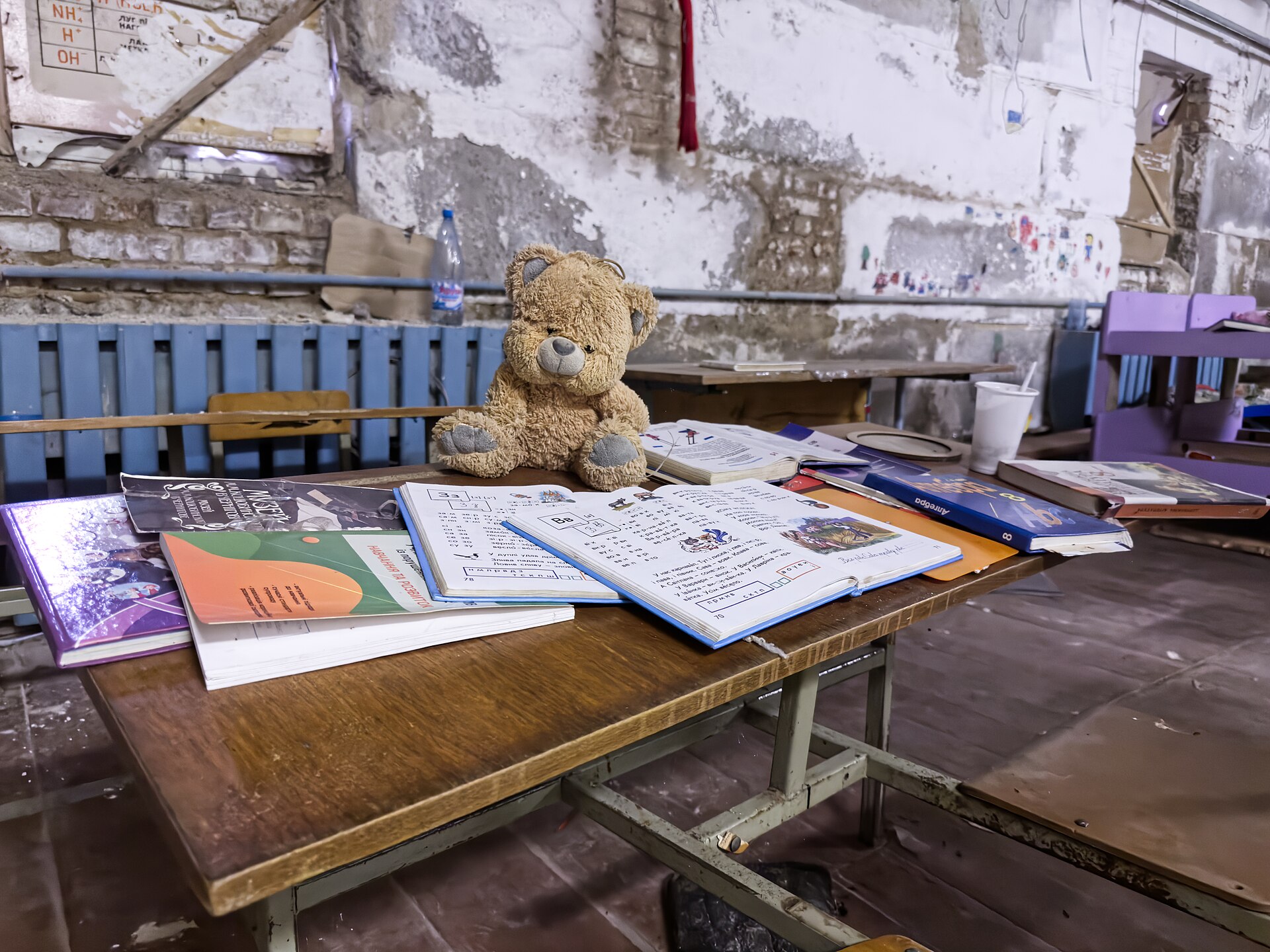
Reconstruction there includes decisions about what should change and what should remain as evidence.
An August 2025 report from Ukraine’s Agency for Restoration described housing repairs alongside plans for roads, water infrastructure, a public building with a shelter, and a memorial associated with the school. The report placed a club and library within the wider reconstruction program. These were reported stages and plans at that date, rather than proof that every element had been completed.13
A village needs somewhere to remember and somewhere to carry on with daily life. Neither purpose is simple, and residents may experience the same building differently.
The reconstruction story becomes richer when it allows that complexity. A repaired street does not erase what happened there. A new gathering place can give people more choices about what happens next.
Somewhere to return to
Repair Together’s partnership with the human-rights organization LIBERECO includes a project to renovate and enlarge a youth cultural center in the Chernihiv region. The partners describe an open place for residents and volunteers to meet and hold cultural events.14
The ambition brings the story back to the gathering itself.
The music at a cleanup can help people begin. A regular place to meet can help a relationship survive beyond that first invitation. Both require work from people whose names may never appear in the photograph.
There is pleasure in doing something alongside others, and there can be frustration, fatigue, and disagreement. A useful account of volunteering leaves room for all of them. Enthusiasm has practical needs: materials, meals, transport, expertise, and time.
The cultural significance lies in the form of life people are trying to make possible. They are repairing a home that someone wants to inhabit, or a room that people might use together. The desired outcome is particular enough to imagine.
A door opens properly. A window keeps out the weather. Someone returns for a rehearsal, a workshop, or a conversation that has nothing to do with the damage.
The most revealing detail may still be the woman in Lukashivka looking for a volunteer she already knew. A stranger had become someone she expected to see again.
That is part of what rebuilding can make: another reason to return.
Read reconstruction as a sequence
A dramatic cleanup photograph compresses work that unfolds in stages. The cited reports let readers distinguish those stages without treating a plan as a finished building. The dates below are dates of accounts or snapshots, not a claim that each project remains at the same stage today.
- 2022 cleanup reporting. Sorting debris and reusing material. Who directs the work at this property? [5]
- September 2023 reconstruction snapshot. Buildings at different stages of work. Which specific building later became usable? [6]
- August 2025 Yahidne plans. Housing, infrastructure and memorial purposes. Which elements have independently documented completion? [13]
Homeowner authority is a useful thread through the sequence. Extra labor does not replace the resident's knowledge of the place. A completed task should be named at its actual scale: cleared debris, a repaired window, or an accessible room. Those distinctions make progress legible without turning every stage into a triumphant ending.
Sources and further reading
A researched cultural essay based on the linked sources. No original interviews or firsthand reporting are claimed.