When Olia Hercules’s grandfather built a summer kitchen, a branch of a yellow cherry tree stood in the way. His solution was to let the branch pass through the roof.
Hercules shared the story in a 2021 interview with Ukraїner. The image later appeared on the cover of her cookbook Summer Kitchens, illustrated by Anastasiia Stefurak: a building accommodating a tree, and a family finding a way to keep both.1
It is a good place to begin exploring Ukrainian food. Before the restaurant menu or the famous national dish comes a relationship with a particular patch of ground. There is a tree someone has watched grow, a structure someone has built, and a decision that makes sense to the people who live there.
That specificity can be difficult to keep in view during war. Ukraine’s food becomes a symbol of endurance, its cooks representatives of a nation. Those larger meanings are real, but there is more pleasure and complexity underneath them. Food also involves stubborn preferences, family ingenuity, the weather, and whatever happens to be ready in the garden.
To understand what wartime kitchens are helping sustain, it is worth spending time with those everyday particulars.
A second kitchen, close to the garden
In Hercules’s account of Summer Kitchens, these small buildings stand apart from the main house, often near fruit trees and vegetable plots. They provide a place for cooking and preserving what the warm months produce, preparing food that will carry a household into winter. Her book follows the buildings and the people who use them across different parts of Ukraine.2
The arrangement has a practical logic. A separate cooking space keeps summer heat away from the house. Nigella Lawson’s review of the book also points to the kitchens’ role in preparing stores for colder months.3
Here, the kitchen extends across time as well as space. Something picked now may be eaten long after its season has passed. A meal in winter can depend on work done while the garden was abundant.
That makes preservation part of the cultural story. Knowledge includes recognizing ripeness, judging texture, deciding what can be stored, and remembering how the household likes it. Written quantities help, but they cannot capture every decision made by someone who has repeated a task for years.
There is beauty in this work, and effort. Washing produce and preparing jars take time. The appealing photograph of a pantry is the result of labor that deserves to be visible.
Hercules’s own recipes convey some of that visual pleasure. Her pelustka, a cabbage and beetroot ferment, takes its name from the idea of petals. Beetroot colors the cabbage a vivid pink. Even without tasting it, a reader can see how a familiar vegetable becomes something transformed through preparation and waiting.4
A preserved food carries more than an ingredient. It carries somebody’s attention.
A bowl with room for disagreement
Borshch offers an especially rich way into this world because it invites such confident opinions.
Ask what belongs in the pot and the answer may arrive with the authority of a childhood kitchen. Ask someone else and the answer changes. That variation is part of the dish’s cultural interest.
In her Ukraїner interview, Hercules described researching regional versions that unsettled a single familiar image of borshch: fish, including small eels, in Polissia; smoked pears in Poltava; and a large dumpling associated with Tavria in the south. A dish that appears straightforward from a distance becomes a set of local possibilities.1
The smoked pear is particularly intriguing. In chef Ievgen Klopotenko’s vegetarian recipe, it joins beetroot, cabbage, potatoes, and other vegetables, bringing a smoky character to a soup made without meat. It is an ingredient with enough personality to alter what someone expects from the bowl.5
These differences make a useful invitation for an unfamiliar cook. Instead of beginning with the demand for one definitive recipe, begin with a person or a place. Whose version are you making? What ingredients were available there? Which taste would the cook immediately notice was missing?
That approach allows accuracy and variation to coexist. A family recipe can be quite particular without becoming a rule for every other family.
It also keeps the people behind a dish in the picture. “Traditional” is a convenient word, but it becomes more informative when someone can tell you who made the soup, where they learned, and why this version tastes the way it does.
Following the sourness backward
The familiar red bowl has a longer and less tidy history than its modern image might suggest.
A Smithsonian account of borshch traces its name to a Slavic word associated with hogweed, a plant used in earlier sour soups. Beetroot became central to many later versions. The account also explains the Yiddish route behind the spelling “borscht,” which became familiar to many English speakers.6
That history opens two directions of travel. One leads backward through changing ingredients. Another follows people carrying a dish into new languages and places.
The sourness provides a thread. Ukraїner’s research into borshch describes cooks using ingredients such as beet kvass, sour apples, cherries, whey, or sorrel to give the soup acidity. Tomatoes are one option within a much broader history of flavor.7
This is cultural history that can be understood through the senses. Sour apple and fermented beetroot will not produce the same bowl. A recipe records choices about balance, including sweetness, acidity, earthiness, and richness.
The point is not to turn lunch into an exam. Knowing a little of this history can make the food more enjoyable. A detail that seemed unusual becomes a clue. A family’s insistence on a particular ingredient becomes something to ask about.
It also becomes easier to understand why arguments over a dish can be so charged. People may be defending a memory as much as a formula. The conversation is about taste, but it can also be about whose knowledge receives recognition and whose story gets told.
A phone call about chebureky
The food of Ukraine includes traditions that a single national dish cannot represent.
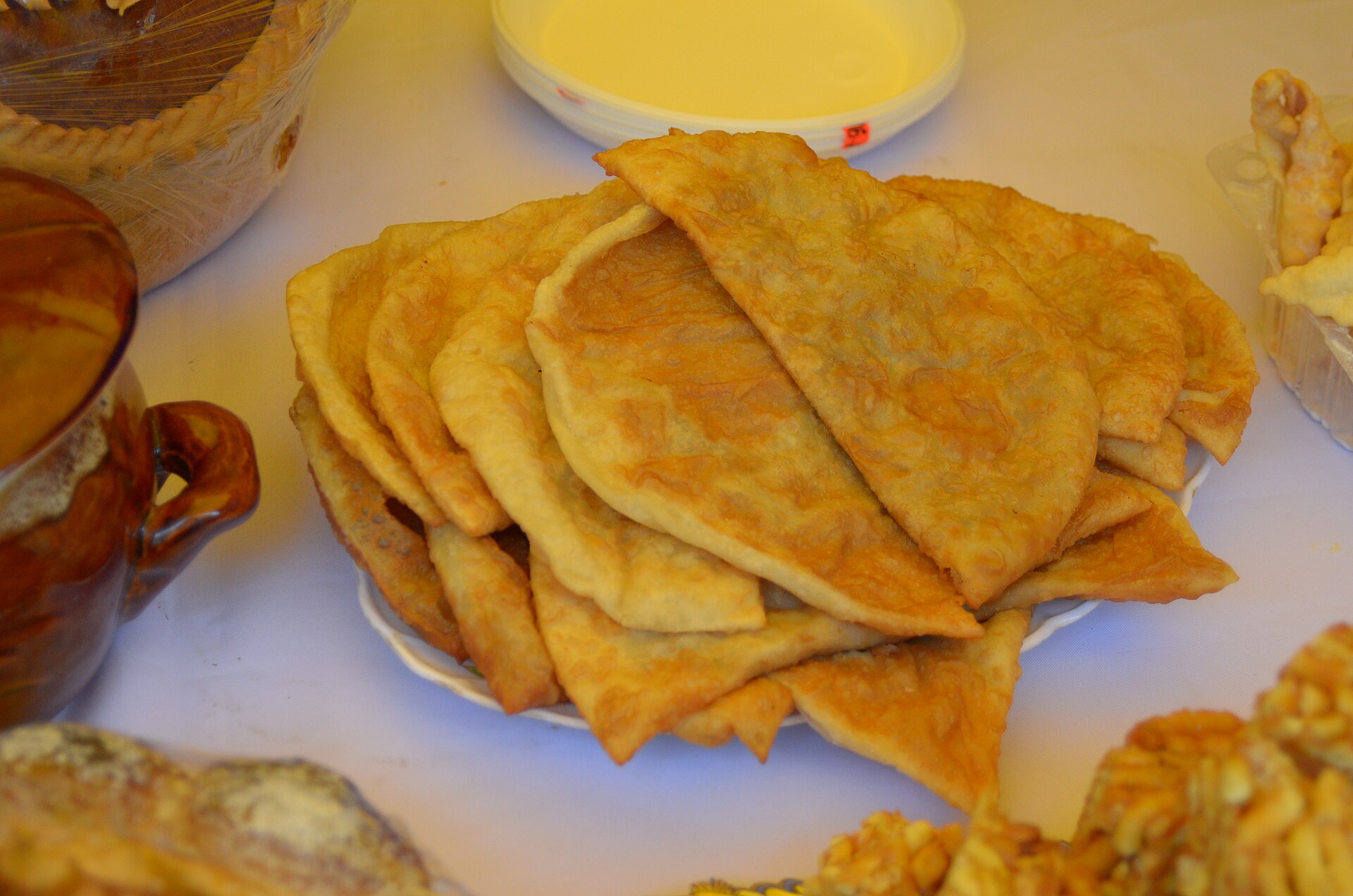
Ukraїner’s profile of Crimean Tatars tells a story about Asan Budzhurov, a student in Kyiv who missed chebureky, the filled pastries associated with home. He called his father, Eskender, about them. After the family moved from Crimea to Kyiv in 2014, they opened Sofra in the city’s Podil district.
Asan, trained as an architect, worked on the restaurant’s interior. His parents brought their knowledge of home cooking. Among the foods discussed in the profile are fried chebureky and yantyq, cooked in a dry pan.8
The restaurant story brings several kinds of knowledge together: a son’s design training, his parents’ cooking, and the wish to find a familiar taste in a different city.
Crimean Tatar food also carries a history of forced movement that long predates 2022. Soviet authorities deported Crimean Tatars from their homeland in 1944; large numbers were able to return only decades later, toward the end of the Soviet period.9
An account published by Ukraine’s Mission of the President in Crimea describes the effects of deportation on culinary knowledge: separation from familiar ingredients and equipment, and the loss of people who knew particular recipes and techniques. Food traditions continued under radically altered circumstances.10
This history asks something of a reader encountering Crimean Tatar food in Kyiv. Enjoying a pastry can be the beginning of a conversation about the people who make it, their homeland, and the journeys that brought the kitchen here.
Specific names matter. Calling everything simply “Ukrainian food” can obscure a community’s distinct history within Ukraine. A richer table allows people to describe their own traditions.
What a kitchen can do during war
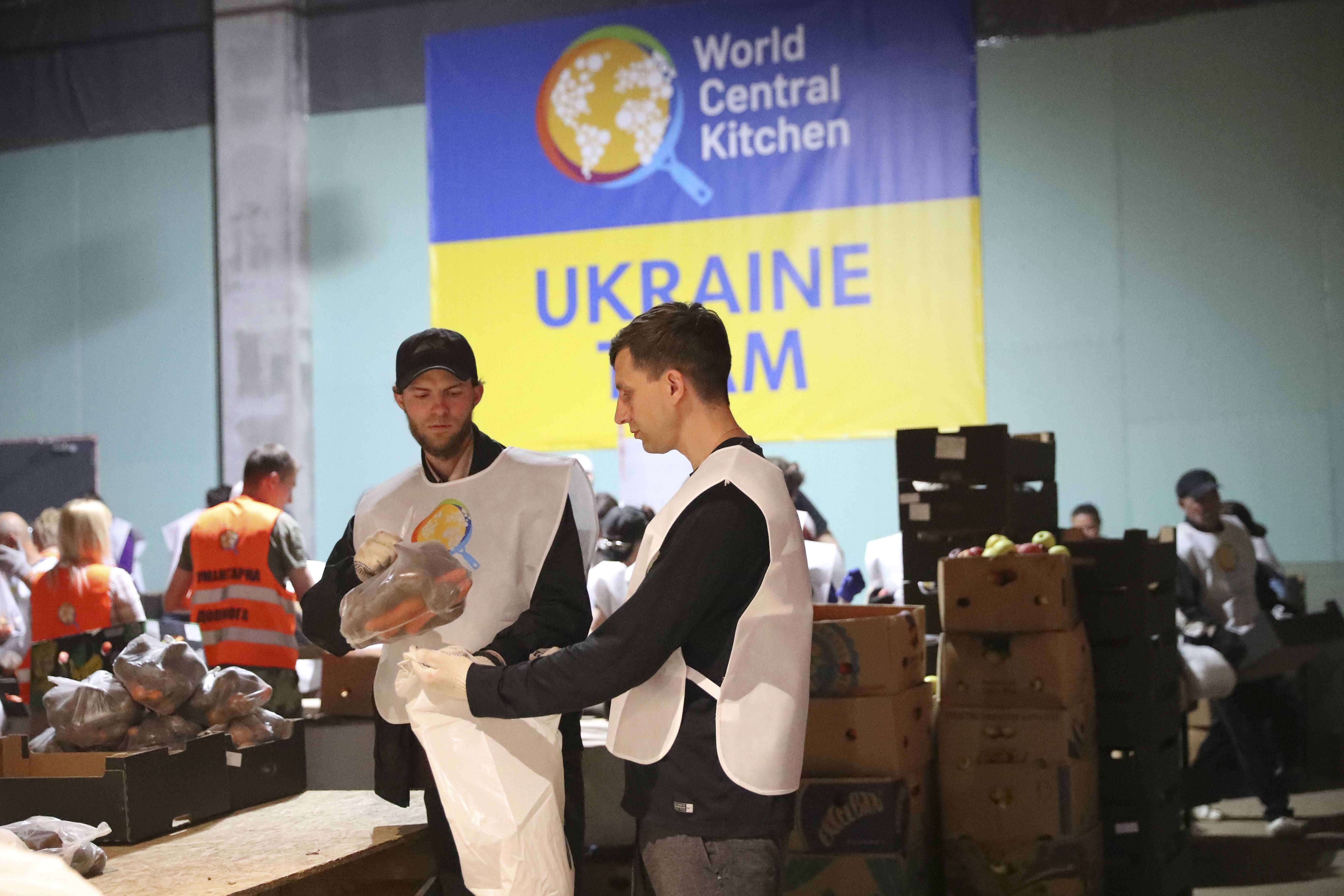
The connection between food and care becomes especially tangible in Kharkiv’s Hell’s Kitchen.
In a May 2026 report, Ukraїner followed Olena Hodz, a baker and confectioner who had previously worked as a teacher. She left Kharkiv after the full-scale invasion, then returned about six months later. Friends in Lviv told her about the volunteer kitchen. Soon she was baking there.
The report described daily production of roughly 1,200 meals and 600 rolls at that time. It also followed the less visible work: preparing ingredients, weighing and shaping dough, cooling and packing food, and washing the equipment needed to begin again.11
The numbers convey scale. The sequence of tasks conveys something else: how many ordinary acts have to connect before a meal reaches someone.
A kitchen needs people willing to repeat work. Someone has to arrive for a shift. Someone has to clean what the previous task left behind. The person washing a pot is part of the same act of care as the person deciding what goes into it.
Hodz’s change of work also adds depth to the story. A wartime kitchen is made from people with lives and skills beyond the role a visitor sees. Understanding that helps keep “volunteer” from becoming an anonymous category.
Cooking together can offer a manageable task within circumstances that feel unmanageable. The larger situation may remain frightening. A batch of dough still asks for a series of decisions that people can make together.
Recipes built for a journey
Some wartime food work began years before the full-scale invasion.
Ukraїner’s reporting on Ukraine’s “gastronomic front” describes the Lviv Volunteer Kitchen, active since 2014, and a project in Kolomyia involving displaced women. Such initiatives prepared dried ingredients and meals for people serving in the military, adapting familiar food to the demands of storage and transport.12
This is a different kind of recipe problem. The cook is thinking about a meal that will be finished elsewhere, under conditions they may never see.
A dish has to survive the journey. Its instructions have to make sense. The person receiving it needs to be able to turn what is in the package into something worth eating.
The cultural work lies partly in that adaptation. A familiar meal does not have to remain in its original kitchen to matter. People can change its form because they want someone far away to recognize it.
There is an emotional limit here, too. Food cannot recreate the safety of home by itself. Describing it as comfort should leave room for the person who eats with mixed feelings, grateful for the meal and painfully aware of who is absent.
Care can be valuable without solving everything.
The kitchen as a place to listen
On the Swedish island of Gotland, cooking became a way to gather stories from Ukrainian women displaced by the full-scale invasion.
A project documented by Ukraїner brought six women into conversations around preparing borshch. One participant, Olena Popelnytska, had already experienced displacement as a child after the Chornobyl disaster. Leaving Kyiv in 2022 meant building a life away from home again.
Her account included memories of her grandparents’ cooking and an old oven. It also included a childhood doll she had recovered during an adult visit to Prypiat and later kept beside her bed in Gotland.13
The doll might seem a surprising detail in a story about soup. It helps explain why the setting matters. Once someone is invited to talk about a kitchen, the conversation can move toward the people, rooms, and objects that made up a home.
A recipe gives the exchange a starting point without determining where it has to end.
That is a generous way to approach food culture. Ask a person how they cook something and allow the answer to become a story. There may be an ingredient to write down. There may also be a parent, a disagreement, a lost garden, or a practical trick learned through necessity.
The table can hold those different kinds of knowledge at once.
More than a symbol on the table
Across these stories, Ukrainian food acquires its importance through use.
A summer kitchen turns a garden’s abundance into something a household can keep. A smoked pear changes the flavor of a familiar soup. A Crimean Tatar family creates a restaurant around knowledge carried from home. Volunteers organize the work that makes tomorrow’s meals possible. Women in Gotland find that cooking can make room for a much longer account of their lives.
These are distinct experiences. They do not need to be gathered into one tidy lesson about national character.
What connects them is the attention people give to food and to one another. That attention can be skilled, improvised, affectionate, exhausting, or all of those things within the same afternoon.
For an outside reader, the best next step may be a small one: learn whose recipe you are using. Read beyond the ingredient list. Notice the region, the language, and the people credited.
Then leave room for a story as particular as a yellow cherry branch passing through a kitchen roof.
That is where a culture becomes easier to meet: in the choices people make so that something they value can stay.
Compare a flavor, a journey, and a shift
A regional ingredient, a portable meal and a volunteer kitchen solve different problems. Following that difference is more informative than assigning all three the same symbolic meaning. The source account is the starting point; a reader does not need to assume the recipes or working conditions are interchangeable.
| Example | Problem being addressed | What the source can show |
|---|---|---|
| Smoked pear in borshch | How a cook changes flavor without meat. | One named recipe, not a national formula. [5] |
| Dried volunteer meals | How food travels and is finished elsewhere. | Adaptation to storage and transport in reported projects. [12] |
| Hell's Kitchen in May 2026 | How daily preparation becomes meals for distribution. | Output and tasks reported at a specific time. [11] |
The comparison also marks a research limit. A recipe explains ingredients and sequence; it cannot establish an organization's present capacity. A dated production report explains that moment, not every kitchen. Follow both the person credited with the recipe and the organization credited with the meal.
Sources and further reading
A researched cultural essay based on the linked sources. No original interviews or firsthand reporting are claimed.