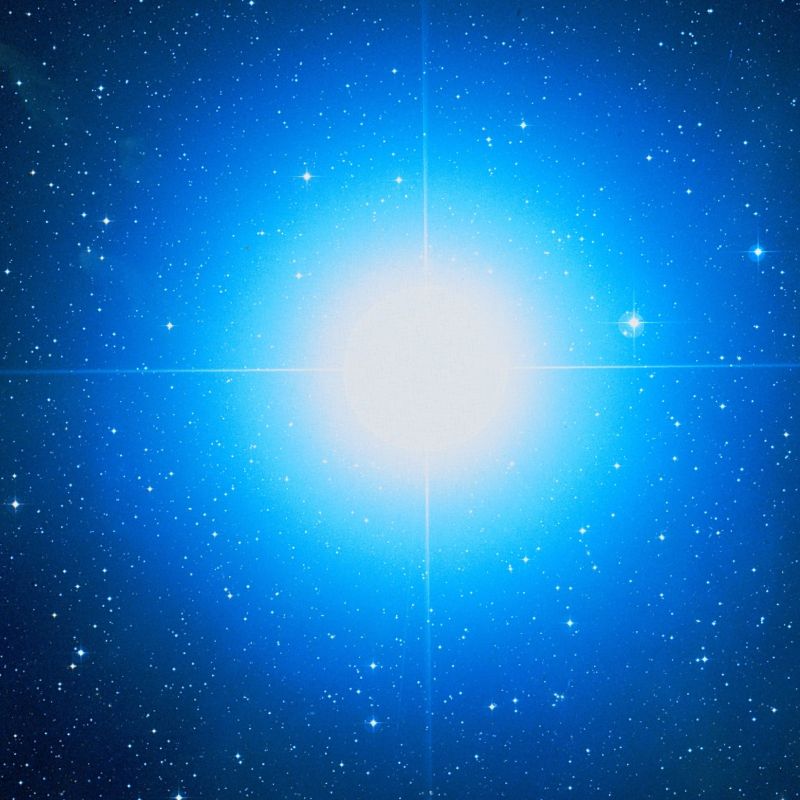
Across Aotearoa, the Māori name for New Zealand, the new year is approached through a sky that differs from one place to another. Maunga, or mountains, can shape what is visible above a community’s horizon. For some iwi, kinship communities connected through shared ancestry and place, Puanga is the seasonal anchor. Western astronomy names this star Rigel, the brightest in the constellation Orion. Matariki is the Māori name for the star cluster also called the Pleiades, and the new-year observance associated with its rising. Te Papa describes Puanga traditions in parts of the Far North and South Island, as well as Taranaki and Whanganui. Te Tai Tokerau names the northern North Island; Taranaki lies on the island’s western coast, while Whanganui names both a river and the communities connected with it. In Whanganui river valleys, the terrain can obscure Matariki while leaving Puanga visible. The distinction is local, not a fixed rule that one star always rises a week before the other.[7][8][9]
This regional variation is not a rejection of Matariki, but a practical and spiritual adaptation to the landscape. In a University of Auckland article, Te Kahuratai Moko-Painting draws on knowledge handed down by tohunga, expert holders of knowledge, such as Rereata Makiha. His account explains why some iwi in Aotearoa mark the New Year with Puanga, while Matariki has a different place in the sky and in regional traditions [1].

A Shared Whakapapa of Stars
The distinction between Puanga and Matariki is framed within a shared whakapapa, or genealogy, of stars. Moko-Painting describes the two as sisters, with Puanga as the older sister and Matariki as the younger, beautiful one. A traditional whakataukī, a proverbial saying, encapsulates this dynamic: “Ko Puanga, ko tōna mahi he toa-whawhai ki ā Matariki; te take, he tohe kia riro te tau i ā ia.” This translates to Puanga’s role being to spar with Matariki to become the star of the year.
This narrative underscores that the choice of star is rooted in local visibility and ancestral guidance rather than a single, monolithic calendar. Professor Rangi Matamua, identified in the 2025 account as the government’s advisor on knowledge of Matariki, notes that while the specific stars marking the beginning of the Māori new year may vary by region, the underlying themes of the ceremony remain consistent. Both Puanga and Matariki are celebrations of an ancient lunar-solar timekeeping system. The 2025 theme invited people to learn about the Māori New Year together while acknowledging communities that observe Puanga.
The Rhythms of Maramataka
Beyond the specific stars, the Māori New Year is embedded within the maramataka, the Māori lunar calendar. Ayla Hoeta, a maramataka practitioner, lecturer, and first-year doctoral candidate in the Faculty of Engineering and Design at the University of Auckland, describes maramataka as a way of understanding the sacredness of time. It is not merely a calendar but a system that connects people with the rhythms of the moon, stars, tides, and the body.
Hoeta describes maramataka as a way of paying attention to time in everyday life. For instance, the phase of Whiro, the dark phase marking the beginning of a new moon cycle, is associated with rangahau (research), wānanga (meaningful discussions), grief, and reflection. This distinction is crucial: Whiro is often associated with darkness, but this should not be mistaken for negativity. It is a time for inward focus and preparation.

The holiday falls on a different date each year, with its timing set close to the rising of Matariki and the Tangaroa phase, a named period in the maramataka’s lunar cycle. Hoeta notes that Matariki is a key tohu (sign) of the maramataka, gaining recognition as the main celebratory event embedded in policy. However, she argues that the holiday offers an opportunity to look at the wider system in which the celebration sits, inviting people to look around and within, not just up.
Regional Practices and Food
The cited account connects Puanga with seasonal food and the phrase “Puanga kai rau.” Its discussion of kererū belongs to the historical and regional account being described; it is not present-day guidance about gathering or consuming protected wildlife. An English introduction cannot replace the fuller local knowledge behind that account.[2]
The sources describe Puanga and Matariki through particular places and knowledge holders. They should not be turned into a universal schedule for all iwi. Preparation, remembrance and gathering can extend beyond one public holiday, but the timing and meaning must remain attached to the local account that explains them.[2]
The Ceremony of Whāngai
The Whāngai i te Hautapu ceremony is a central practice for acknowledging the rising of Matariki. It involves offering food to the stars by releasing steam from a cooked meal into the sky. Before the rising of Matariki, special food is taken from the gardens, forests, rivers, and ocean, and cooked in an earth oven or other cooking method. The steam rising into the sky feeds Matariki, symbolizing the connection between the earth and the celestial realm.
Te Papa's home ceremony guide suggests choosing food from several domains: land, sky, freshwater, and ocean. Its examples connect these with Tipuānuku, Tipuārangi, Waitī, and Waitā, stars associated respectively with food from the land, sky, freshwater, and ocean; they are examples rather than an exhaustive account of the cluster.
Te Papa's guide asks participants to gather before sunrise. After the karakia, a prayer or invocation, for Pōhutukawa, the star associated with remembering the dead, and the calling of names, the pot is opened for its steam offering; the remaining karakia follow. Its shorter home version is adapted from a larger ceremony.
Living Knowledge and Community
The revitalization of Matariki and Puanga traditions is a living process, involving both academic research and community practice. Ayla Hoeta helped design a playground beside the Puhinui stream in Manukau, in the Auckland area. She describes it as a way to bring maramataka knowledge into children's play and help restore the place.
Hoeta’s research also extends globally, including a project in Antarctica exploring how mātauranga Māori, Māori knowledge, could sit alongside Antarctic science and climate research. She has met Indigenous women revitalizing their lunar knowledge in Hawai‘i, Ra’iātea, and Canada, noting a common theme: the need for practical tools that help Indigenous communities understand ancestral knowledge.
The cited 2025 public account describes a national invitation to learn about Matariki and Puanga. Public recognition and the continued practice of regional knowledge are different questions.[3]
As communities continue to engage in the revitalization of these traditions, there is an opportunity to honor regional variations of the maramataka and acknowledge the stars that have guided different iwi in different ways. Whether celebrating Puanga or Matariki, the goal is to honor the shared whakapapa and the living knowledge that connects people to the whenua, the land, and the stars.
Sources & further reading
Keep the place attached to the sky
A star identification, an account of seasonal knowledge and a public celebration are related evidence, but they operate at different scales. Naming that scale avoids turning one guide into a universal ceremony. A photograph taken elsewhere can identify a celestial object without documenting the sky seen from a particular river valley.
| Evidence | Useful for | Boundary |
|---|---|---|
| Te Papa's Puanga/Matariki explanation | Understanding regional differences. | It does not erase differences within regions. [2] |
| Hoeta's maramataka account | Following one practitioner's explanation of everyday time. | It is attributed knowledge, not a universal schedule. [5] |
| Te Papa's home hautapu guide | Understanding an explicitly adapted home ceremony. | It does not authorize retelling restricted or locally specific knowledge. [6] |
Begin by asking whose account you are reading and from which place. Keep Māori names and their meanings attached to the source that explains them; a brief English gloss cannot carry every association. The public holiday can invite learning while regional practice remains more detailed than the holiday's national description.
Sources & further reading
- auckland.ac.nz. Why some iwi acknowledge Puanga instead of Matariki – University of Auckland.
- tepapa.govt.nz. The difference between Puanga and Matariki | Te Papa.
- matariki.com. Matariki News | Puanga to be star of Matariki 2025.
- matariki.twoa.ac.nz. Matariki Celebrations – Matariki.
- auckland.ac.nz. Ayla Hoeta: Matariki and maramataka – University of Auckland.
- tepapa.govt.nz. How to host your own hautapu at home | Te Papa.
- Te Papa: Astronomers explain Puanga and Matariki.
- Te Aka Māori Dictionary: maunga.
- Te Aka Māori Dictionary: iwi.